Taking Over an Existing Restaurant in Selangor: What a First-Time Owner Should Check

APIO JOURNAL · F&B DESIGN & BUILD · SELANGOR
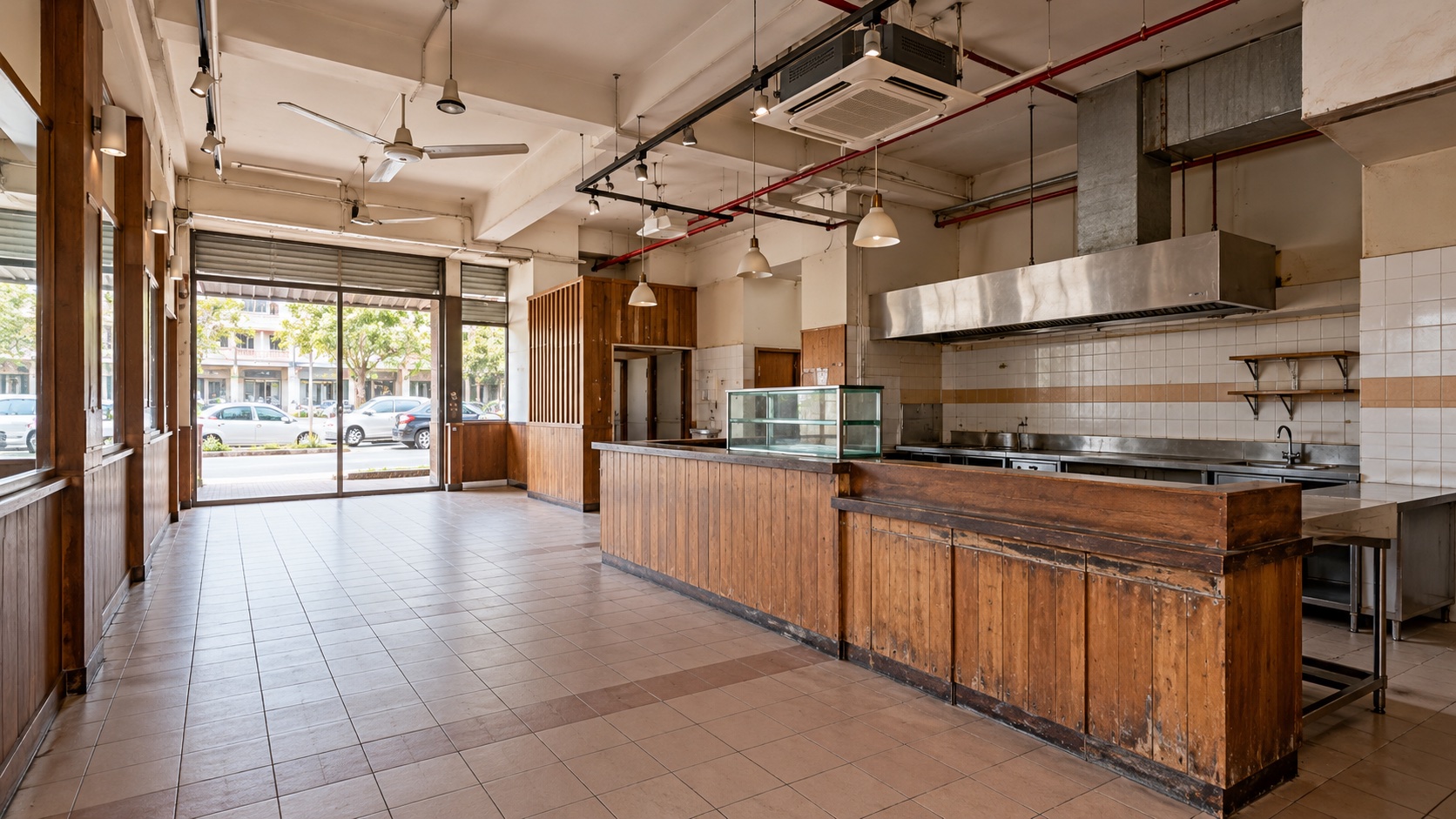
Taking over an existing restaurant in Selangor can look simpler than starting with an empty unit. There may already be a kitchen, an exhaust system and a furnished dining area. But those items only have value if their condition, suitability and ownership are clear.
Before you build your renovation budget around what is already there, prepare a retain, repair and replace assessment. For a first-time F&B owner, this turns an attractive viewing into a practical decision about the premises. It also gives your designer and contractor a better starting point than photographs alone.
Begin with your menu, not the existing furniture
Write down what you intend to serve, how food will be prepared and the balance between dine-in, takeaway and delivery. A former drinks-led cafe may not suit a cooking-heavy restaurant without substantial changes. A counter designed for table service may not support your intended ordering and collection sequence.
Prepare a rough equipment list with your kitchen supplier. Use it to assess the space and technical requirements rather than assuming that an existing commercial kitchen fits every concept. A site review should establish what can be verified and what needs further specialist assessment.
Make an asset register before negotiating around equipment
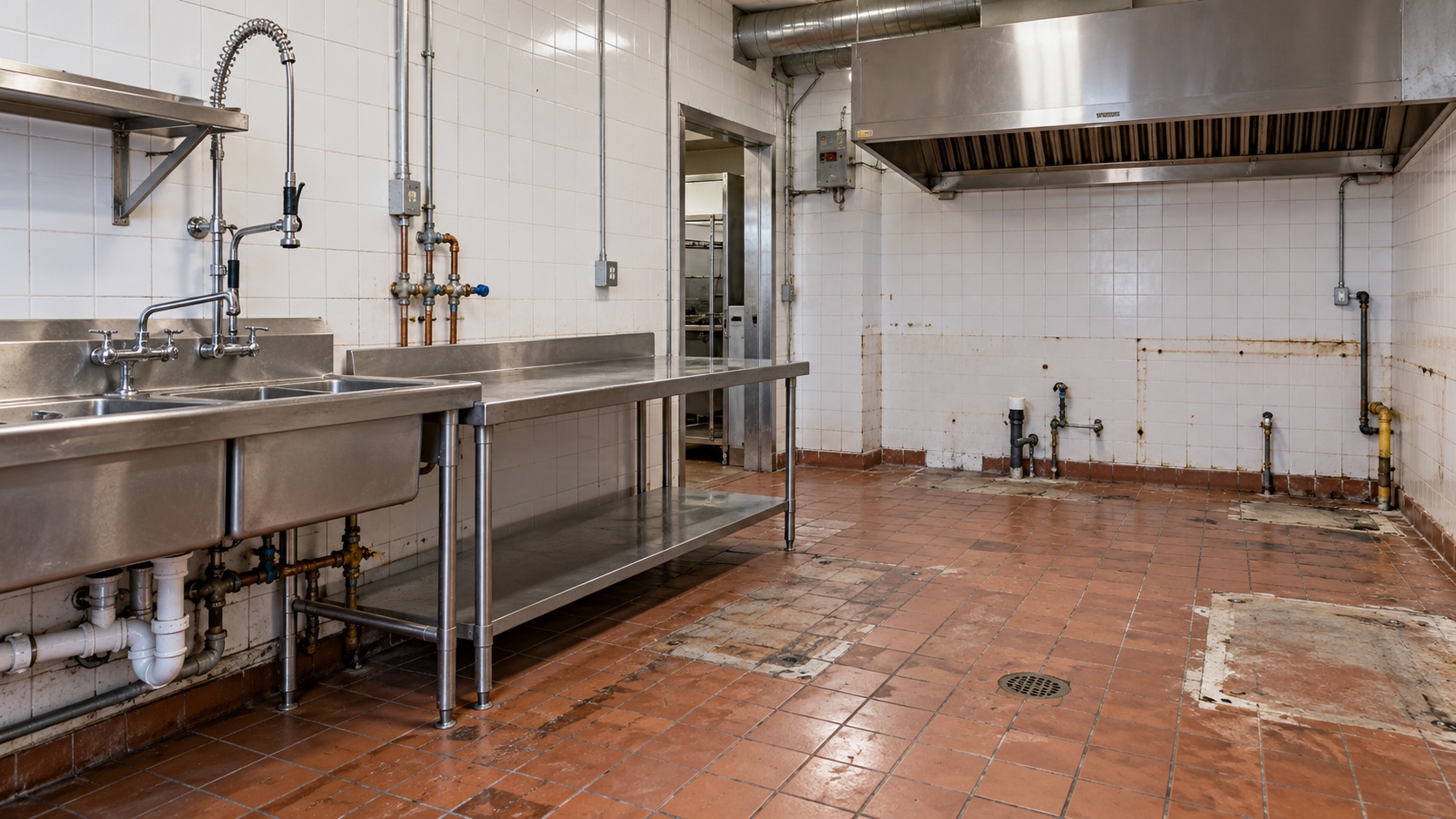
List every item you are told is included: counters, refrigeration, cooking equipment, air-conditioning, furniture and signage. Record its location, model where available, visible condition and whether it can be demonstrated. Obtain written clarity on ownership and what is actually included in the proposed arrangement.
An item looking intact does not establish that it works correctly or can be reused economically. Ask for available service records and have relevant specialists assess critical equipment. Do not assume that a previous operator’s permissions, warranties or supply arrangements automatically transfer to your business.
| Decision | Evidence to gather | Budget treatment |
|---|---|---|
| Retain | Suitable for the new menu, verified condition, ownership clear | Allow for cleaning, servicing and reconnection where needed |
| Repair | A defined fault with an assessed repair scope | Request a specific quotation and compare with replacement |
| Replace | Unsuitable size, capacity, condition or configuration | Include removal, delivery, installation and making good |
| Investigate | Concealed condition or documentation not yet established | Record the uncertainty; do not treat it as a free asset |
Inspect the connections behind the visible fit-out
Ask the relevant professionals to review power, water, drainage, ventilation and other services against your proposed equipment. Existing connections do not prove that capacity or routing is suitable. Pay attention to access for inspection and maintenance, not only whether a machine fits on the counter.
Also identify where deliveries, waste collection and staff circulation will take place. Shared-building rules can affect how a restaurant is fitted out and operated. Obtain current requirements from the landlord or building management, and confirm the authority requirements for the actual address and use with the appropriate parties.
Price three scopes before deciding how much to retain
Ask for a clearly described minimum adaptation, a functional upgrade and a more extensive refurbishment. These are comparison scopes, not promises of fixed prices. Each should state what remains, what changes and what is excluded.
A minimum adaptation might preserve the dining area while correcting the service sequence. A functional upgrade could revise the counter and kitchen layout. A larger refurbishment may be appropriate if the existing arrangement conflicts with the new concept. Comparing defined scopes helps avoid spending on finishes before addressing operational constraints.
Check the sequence before choosing an opening date
Map the dependencies: access to the premises, inspections, design decisions, required permissions, procurement, construction, testing and staff preparation. Record which dates are confirmed and which are assumptions. Existing fit-out can save some work, but unexpected repairs can remove that advantage.
Do not let a proposed launch event become the only basis for the renovation programme. Ask what must be resolved before each stage can start, and who is responsible. Allow time to test retained equipment together with new work rather than testing each item only in isolation.
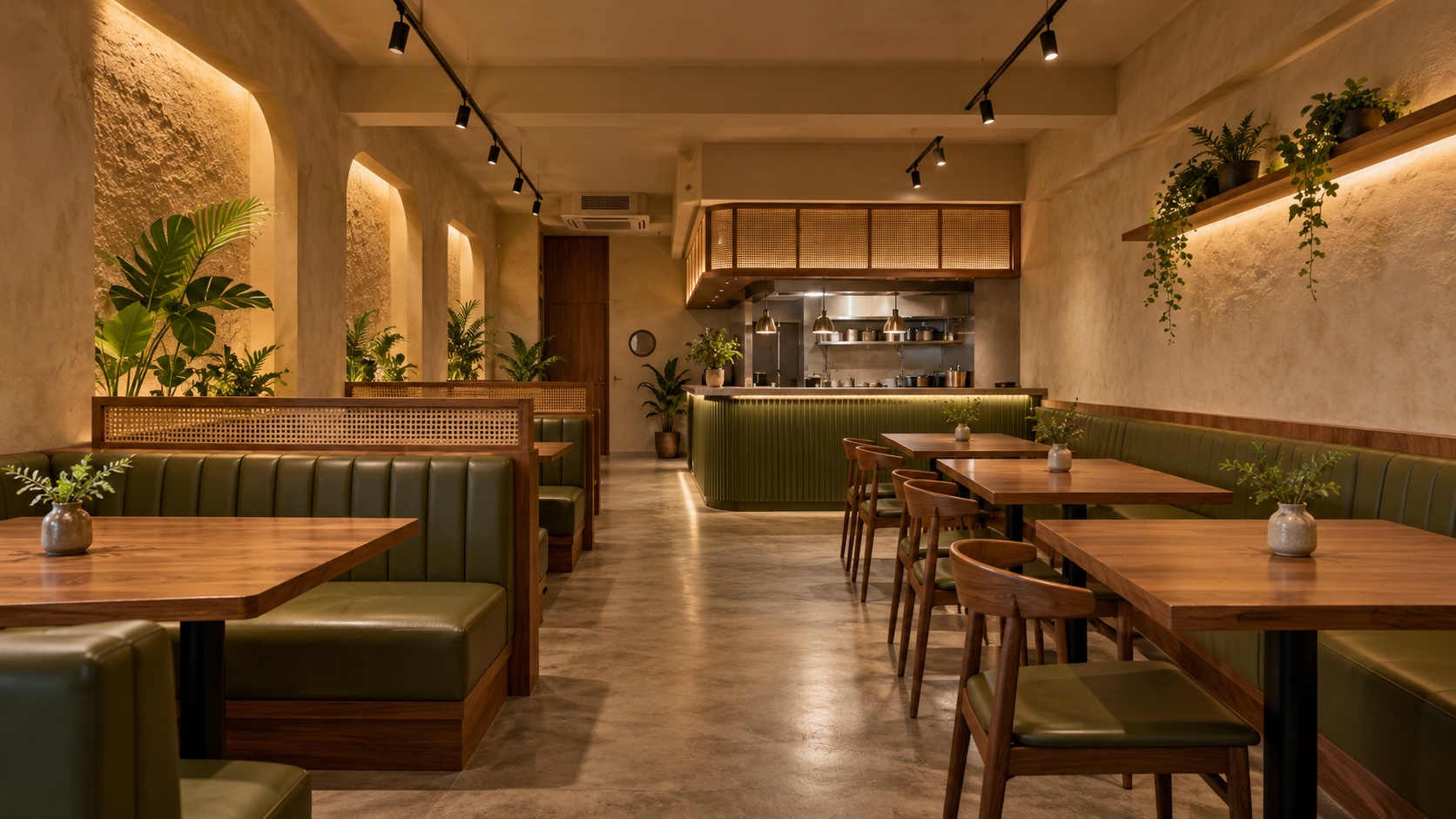
A first-viewing checklist
- Photograph the entrance, kitchen, counter, storage and service routes.
- Obtain available plans and record dimensions that still need checking.
- List included assets and request evidence of their condition.
- Describe the new menu and equipment requirements.
- Record landlord restrictions and unresolved permission questions.
- Separate known costs from provisional allowances.
- Arrange specialist checks before relying on existing services.
Frequently asked questions
Is taking over a restaurant always cheaper?
No. Savings depend on what can genuinely be retained. Repairs, incompatible equipment and layout changes can offset the apparent saving.
Can we keep the previous kitchen layout?
Only after checking it against your menu, staffing and service sequence. Reusing a layout should be an operational decision rather than a default.
Should we get a renovation quotation before committing to the unit?
Seek an initial feasibility and scope discussion as early as access and information allow. A detailed quotation needs clearer drawings and verified site conditions.
Continue with APIO’s site-survey checklist and renovation scope and budget guide. Share your proposed Selangor premises and concept through the F&B project planner to prepare for a practical design discussion.
Tell us about your F&B project
Share your location, outlet concept, budget and scope with APIO using the enquiry form below.