
APIO JOURNAL · F&B DESIGN & BUILD · KLANG VALLEY
A restaurant handover checklist should answer three questions: does the completed outlet match the agreed scope, can the team operate it properly, and is every unresolved item assigned to someone? A clean floor and a finished feature wall do not answer those questions on their own.
For a Klang Valley restaurant, cafe or bar, use handover as a structured working session. Walk the premises with the project team, equipment suppliers and the person who will run daily operations. Bring the agreed drawings and scope, rather than relying on memory.
The short answer
Inspect the space, witness the relevant tests, rehearse a service sequence and record the result. Then collect operating documents and agree how outstanding defects will be closed. Physical handover does not itself confirm that every permission needed to open has been obtained.
1. Prepare the restaurant handover checklist before the walk-through
Ask for the latest approved layout, equipment schedule and variation record in advance. A late change to a counter or sink may affect more than its appearance. It can alter a service route, a socket position or access for maintenance.
Separate the inspection into customer areas, service areas, kitchen, storage, washrooms and external interfaces. Give each zone a reference on the plan. This makes a note such as “door rubs at bottom, kitchen K2” much more useful than “door problem”.
- Confirm who can accept an item and who can authorise a change.
- Invite suppliers whose equipment needs demonstration or commissioning.
- Bring a camera, drawing copy and shared defect register.
- Keep final account and contractual acceptance decisions separate from casual site comments.

2. Inspect finishes, then test how the outlet works
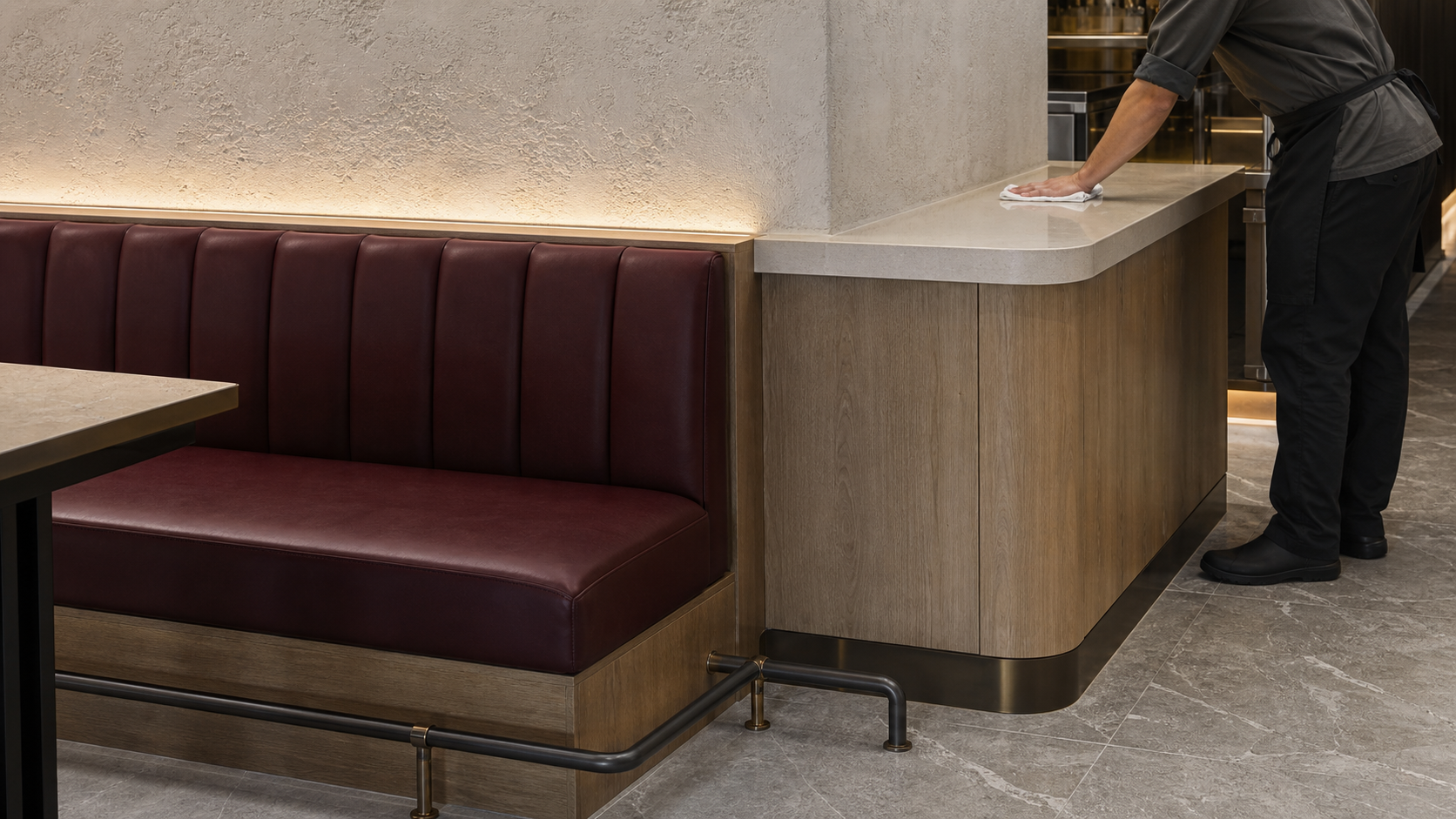
Start with visible workmanship. Review edges, joints, door operation, loose fittings and damage. Inspect counters from both customer and staff sides. Open drawers and cupboards with neighbouring doors open, because a collision may not appear when you test each item alone.
Next, move to operational checks. Do not open electrical panels or attempt specialist tests yourself. The Energy Commission explains the certification required for people responsible for electrical work. Ask the appropriate competent person to explain the relevant results and unresolved issues.
| Area | What to witness or review | Evidence to keep |
|---|---|---|
| Water and drainage | Agreed fixtures operating; visible leaks and drainage concerns checked by the responsible trade | Test record and defect photos |
| Equipment | Supplier demonstration, clearances and accessible controls | Commissioning record, manuals and warranty details |
| Lighting | Each switch and agreed scene, including staff cleaning conditions | Labelled control schedule |
| Joinery | Doors, drawers, edges and maintenance access | Location-tagged snag list |
| Service routes | Order, preparation, collection, clearing and waste movement | Trial-service notes |
3. Rehearse one busy service sequence
Choose a realistic order from your menu. Follow it from ordering to preparation, collection and clearing. Use the people who will perform those jobs. Where do they pause, turn or cross one another? Can a delivery rider wait without blocking customers?
Run the sequence again with a second order arriving and used dishes returning. This is not a formal capacity test. It is a practical way to expose awkward handoffs before the opening team develops workarounds. Record each issue as either a layout defect, an equipment issue or an operating procedure to resolve.
For earlier design decisions, read our guide to counter, queue and kitchen flow. A handover inspection is easier when these routes were agreed before construction.
4. Turn defects into a closure plan
A useful restaurant handover checklist records more than a photograph. Each entry needs a location, description, responsible party, agreed next action and target date. Add a status such as open, ready to recheck or accepted after recheck.
Distinguish an issue that prevents safe or intended operation from a cosmetic item. Ask the relevant professional to assess technical concerns. Do not let a long list of paint touch-ups hide an unresolved equipment or access problem.
Before agreeing that an item is complete, inspect the correction. Keep the original and follow-up evidence together. Contract terms determine acceptance, payment and defect obligations, so refer disputed matters to the agreed contract process rather than assuming a checklist changes those terms.
5. Collect the operating handover pack
- Final drawings and a record of agreed changes, where included in the scope.
- Equipment manuals, warranty terms and supplier contacts.
- Relevant testing and commissioning documents.
- Maintenance instructions and access locations.
- Keys, access arrangements and labelled controls.
- Outstanding items, their owners and the agreed reinspection plan.
Store a copy where the outlet manager can find it. An organised folder is useful only if the person handling a breakdown knows which file and supplier to use.
Frequently asked questions
Can we open if small defects remain?
It depends on the defect, the agreed contract and the permissions applicable to the premises. Get the relevant professional assessment for safety or technical issues. Do not treat cosmetic completion as proof that opening requirements are satisfied.
Should the owner attend handover?
Yes, or nominate a person with clear authority. Include the future operations lead so the review covers daily use as well as the design intent.
Is practical completion the same as launch readiness?
No. Staffing, stock, operating procedures and applicable permissions need their own checks. Keep a separate opening checklist alongside the construction handover record.
Plan the handover while you plan the outlet
For your APIO discussion, bring the location, layout, menu, opening target and the issues you need resolved. We can use those inputs to define a clearer design-and-build brief and the evidence you should expect at handover. Explore APIO Design and start with the decisions your first outlet needs.