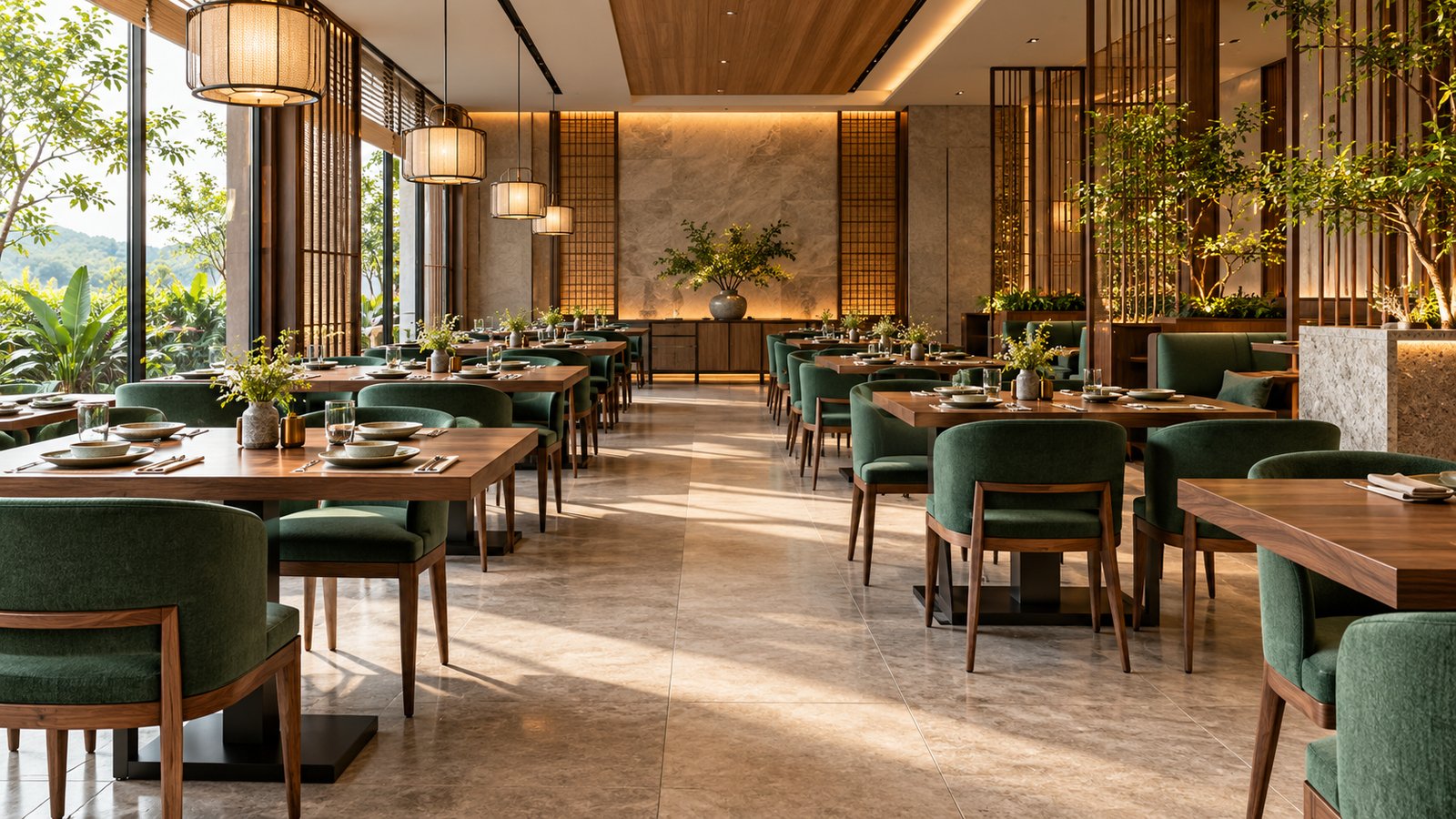

Restaurant fit-out procurement becomes more complicated when the same concept is opening in several locations. A chair, light fitting or counter detail may be repeated, but the quantity, delivery access and installation conditions can differ at each outlet. The aim is to standardise decisions that benefit the brand while recording the exceptions each site actually needs.
For a multi-outlet operator in Selangor, a useful purchasing schedule connects the design drawing, approved item and installation responsibility. A shopping list alone does not explain whether a product fits, who receives it or what happens when the original model is unavailable.
Separate the brand standard from the site quantity
Give every repeatable item a stable reference. Record its approved manufacturer or specification, dimensions, finish, maintenance information and sample reference. Keep the quantity and site destination in separate columns. This lets you retain one standard while ordering different amounts for a compact shoplot and a larger corner unit.
Use performance requirements where an exact model is unnecessary. A staff-area shelf may need a suitable load capacity and cleanable finish without becoming a branded product. Conversely, a highly visible chair or pendant may require a more tightly controlled appearance. Agree which decisions are fixed before asking suppliers to price alternatives.
Build a procurement register that someone can use
| Record | Standard information | Outlet information |
|---|---|---|
| Item reference | Approved model, drawing or specification | Quantity and room or station |
| Finish | Sample and colour reference | Any approved local exception |
| Connections | Selected equipment documentation | Coordinated service locations |
| Supply scope | Included accessories and exclusions | Receiving and installation owner |
| Timing | Supplier-confirmed availability | Required delivery window |
| Acceptance | Agreed inspection criteria | Damage, shortage and defect record |
Add the current revision and decision owner. If a supplier quotation references an older drawing, resolve that mismatch before placing an order. A clear register is also useful when the second outlet opens months later and the people buying the items have changed.

Check compatibility before buying in bulk
Repeat ordering should follow the actual site review. Confirm delivery routes, door openings, installation clearances and connections for the selected items. Do not assume equipment that worked in one branch can be installed unchanged in the next.
For example, Hobart’s AM16X installation manual addresses utility connections, surrounding tables and door clearance when locating that dishwasher. This illustrates the level of model-specific information procurement needs; it is not a specification for a different machine or Malaysian site. Obtain documents for the equipment actually being supplied.
Make substitutions a documented decision
When a proposed item changes, compare more than colour and headline price. Ask whether dimensions, maintenance access, accessories, warranty arrangements or installation requirements change too. The alternative should be checked by the person responsible for the affected design or technical work before it replaces the approved item.
Record the reason, supporting information and affected outlets. An approved substitution for one location should not silently become the standard for every future branch. Keep an updated master list alongside the exception log so the next team can distinguish deliberate adaptation from an unresolved discrepancy.

Plan receiving, storage and handover
Confirm who can accept delivery and where items will be stored before installation. Agree how quantities, finish references and visible damage will be checked. Keep delivery documents linked to the item references, and establish whom the site team contacts when something is missing.
Protect the sequence of work. A large delivery should not occupy a space still needed for installation or finishing. Ask suppliers to confirm their actual lead times and delivery conditions; do not turn an assumed date into an opening commitment. At handover, collect the relevant manuals, warranties and replacement references in a folder the operations team can access.
Before releasing an order
- Confirm the current approved drawing and item revision.
- Check quantities separately for each outlet.
- Resolve interfaces with joinery, services and adjacent equipment.
- Record approved substitutions and exclusions.
- Assign receiving, installation and acceptance responsibilities.
- Obtain supplier-confirmed delivery information.
Use APIO’s restaurant renovation budget guide to organise the wider project scope alongside this purchasing register.
Frequently asked questions
Should every outlet use identical products?
Not necessarily. Keep the agreed brand and operating standards consistent, then document changes needed for each site. The purpose of standardisation is a repeatable decision process, not forcing unsuitable items into a different premises.
Can we order before the design is complete?
Separate items with settled requirements from items dependent on unfinished decisions. Record the risk and responsible approver for any early order; supplier availability alone does not confirm that an item fits the final design.
Who approves a substitute?
Assign a decision owner and involve the people responsible for affected design, installation and operations. Capture the approval in the register instead of relying on a message that other team members may never see.
Plan your Selangor F&B project with APIO
Share your location, menu, measured plan, photographs and opening window through the APIO project planner. Include the decisions still unresolved so the first conversation can focus on the design and renovation scope your business needs.