

Cafe renovation planning should identify who supplies and completes every equipment connection before counters and services are built. “Machine supplied by owner” does not explain who provides the water treatment, drainage connection, power point or final commissioning. Those gaps become difficult to resolve once the equipment arrives.
For a first-time cafe owner in Selangor, begin with the actual models being considered. Give the design and installation teams the supplier’s current documents, then agree the responsibility for each interface. This is a coordination checklist, not a guide to carrying out electrical or plumbing work yourself.
Start with an equipment schedule
List the espresso machine, grinders, dishwasher, ice machine, refrigeration and any cooking equipment. Record the exact model and version, dimensions, supplier and intended location. Include owner-supplied equipment and second-hand items; they still need a suitable place and documented connection requirements.
Ask for installation information before approving the counter drawing. For example, the manufacturer’s La Marzocco GB5 manual includes placement and connection guidance for that machine. It is an example of the documents to obtain, not a universal cafe specification. Have the local supplier confirm the correct information for the model and market version you will receive.
Use a responsibility matrix
| Interface | Questions to settle | Evidence to keep |
|---|---|---|
| Electrical supply | Who designs, provides and checks the supply and final connection? | Approved equipment information and assigned trade |
| Water treatment | Who specifies and supplies the treatment system and fittings? | Supplier requirements and agreed scope |
| Water and drainage | Who provides connection points and completes final connections? | Coordinated location drawing |
| Counter openings | Who confirms positions before fabrication? | Approved template or shop drawing |
| Delivery and placement | Who receives, moves and positions the machine? | Access and delivery plan |
| Commissioning | Who starts up, demonstrates and records checks? | Supplier commissioning record |
Fill each row with a named party and an agreed deliverable. A blank cell is an unresolved item, not an automatic inclusion in someone else’s quotation. If more than one party is involved, show where one scope ends and the next begins.
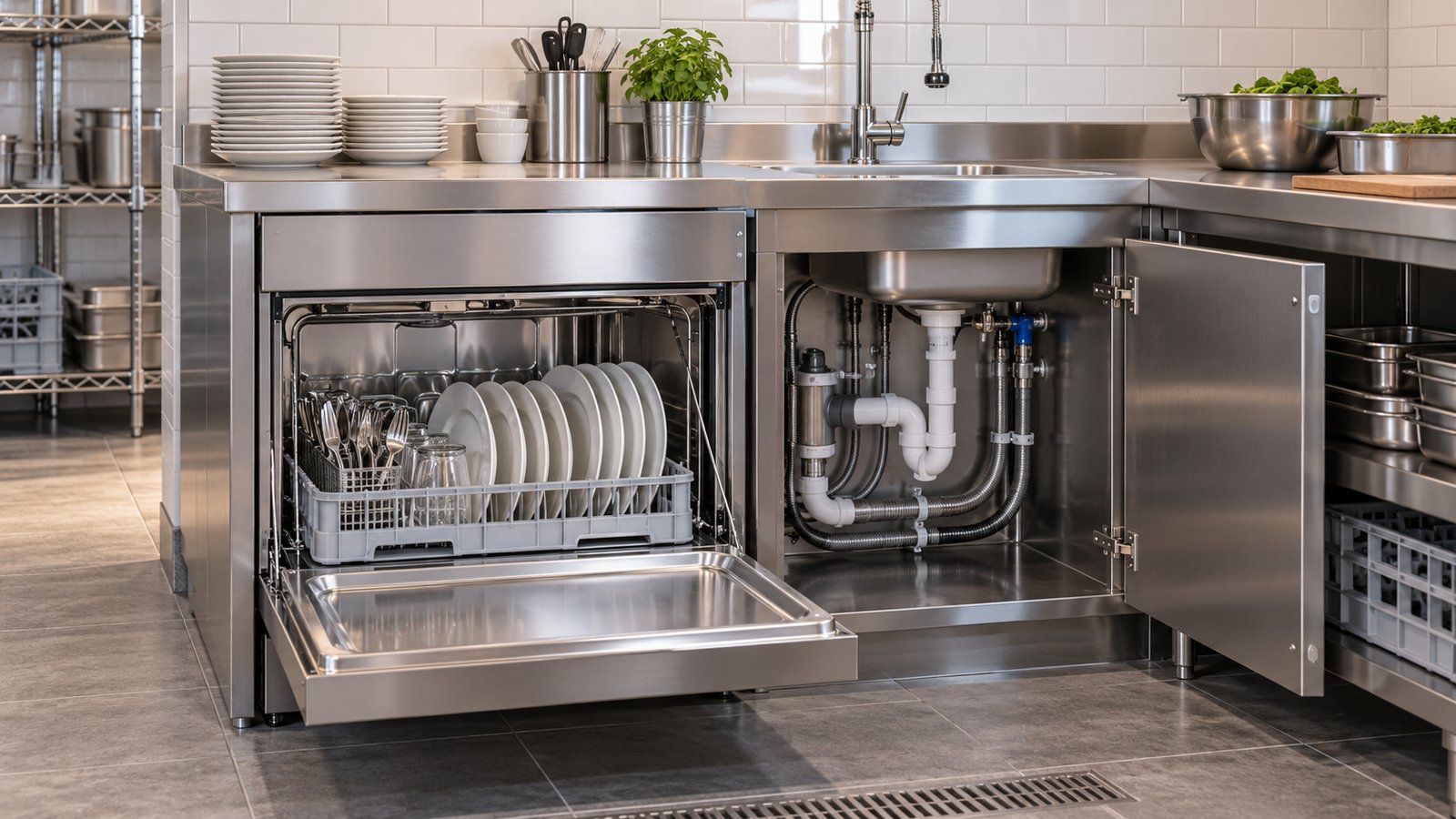
Coordinate the hidden space below the counter
The equipment footprint on the countertop is only part of the arrangement. Ask the supplier and trades what space is needed below and behind it, including access for inspection and maintenance. Check how drawers, bins and storage would interact with those requirements.
Do not hide an unresolved connection behind fixed joinery. Review service positions together with the counter manufacturer before fabrication. If the equipment model changes, revisit the drawing rather than assuming the replacement has identical interfaces.
Clarify the dishwasher and cleaning station
A washing station involves more than placing a machine beneath a bench. Review the flow of dirty items, loading and unloading space, clean-item storage and the supplier’s installation requirements together.
Hobart’s AM16X manual, for example, discusses utilities, adjacent tables, chemical replenishment where applicable and door clearance when considering location. Use the manual for your selected dishwasher to coordinate the actual station. The relevant trades and supplier should confirm the technical arrangement for your premises.
Match quotations to the matrix
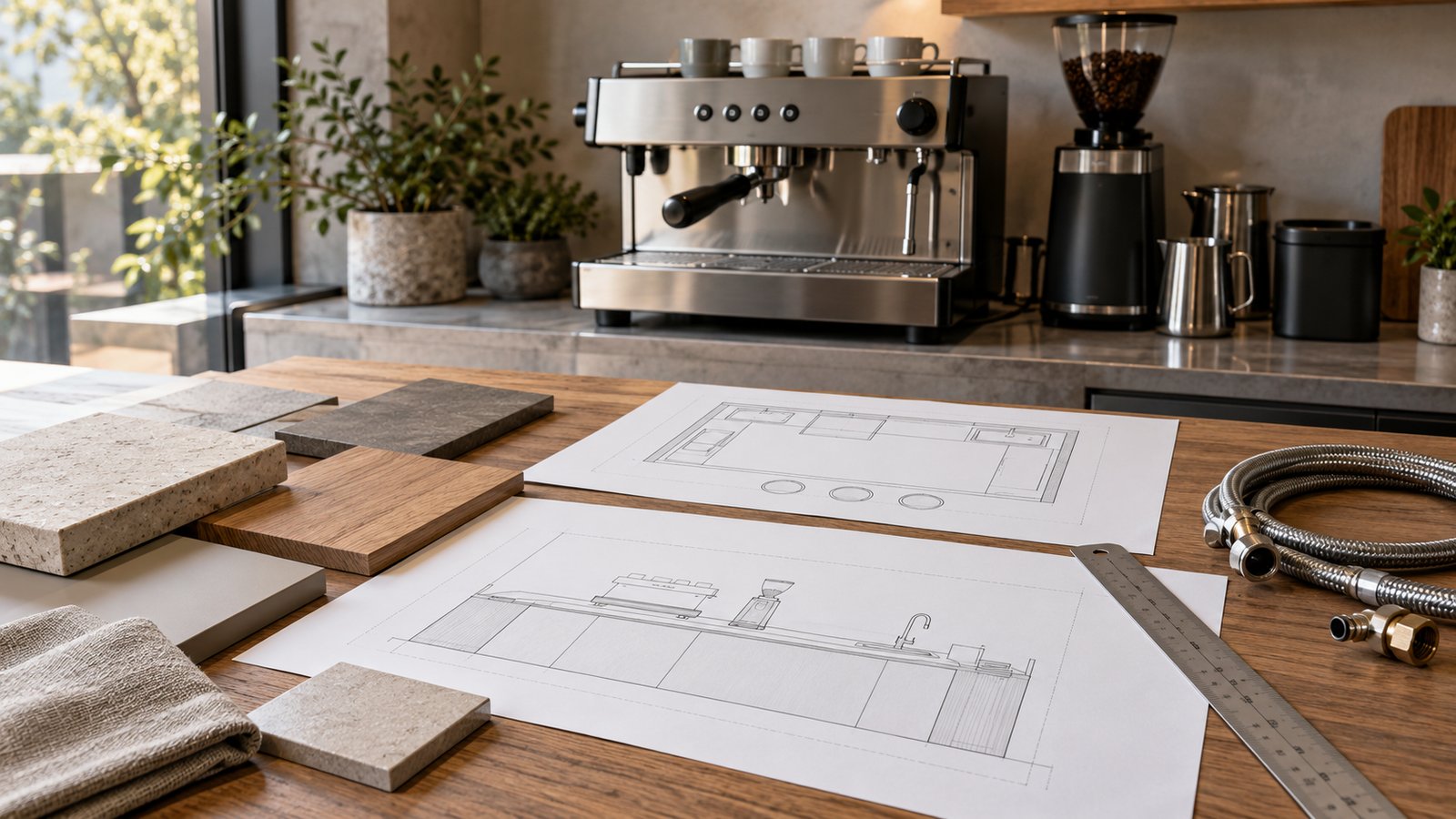
Send the same responsibility schedule to the relevant suppliers and renovation team. Ask each to identify inclusions, exclusions and assumptions. A quotation for delivering a machine may differ from a quotation that includes placement, final connection and commissioning.
Record accessories that are supplied separately. Ask who checks readiness before the installation visit and what information they need. This avoids treating an agreed delivery date as proof that the site is ready to receive and operate the equipment.
Check readiness before the supplier arrives
- Confirm the final equipment models and approved counter drawings.
- Have the responsible trades confirm the required services are ready.
- Check delivery access and the route to the intended position.
- Resolve remaining fittings, treatment and accessory responsibilities.
- Book installation and commissioning with the responsible parties.
- Arrange staff attendance for the supplier’s operating demonstration.
Keep the accepted scope, equipment documents and commissioning records together after opening. When a machine needs servicing, the operations team should be able to identify the supplier and understand which parts of the installation were completed by which party.
Read our cafe M&E planning guide for the wider design coordination conversation. Bring the responsibility matrix into that discussion so design decisions and purchasing decisions stay connected.
Frequently asked questions
Does buying an espresso machine include all connections?
Do not assume it does. Ask the supplier to state what is included and compare that scope with the renovation team’s quotation. Assign every remaining interface before installation.
Can a different machine use the same counter layout?
Possibly, but confirm the new model’s dimensions, connections and maintenance access first. Have the affected parties approve any revised drawing before fabrication or installation.
Who should perform the technical checks?
Use the appropriate qualified trades and equipment supplier for their respective work. The owner’s role is to make responsibilities and required records clear, not to substitute a visual check for technical verification.
Plan your Selangor F&B project with APIO
Share your location, menu, measured plan, photographs and opening window through the APIO project planner. Include the decisions still unresolved so the first conversation can focus on the design and renovation scope your business needs.