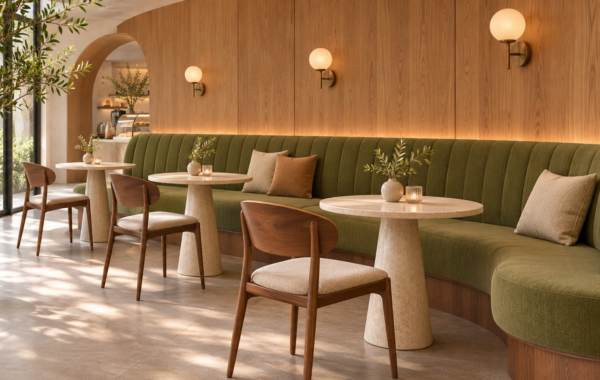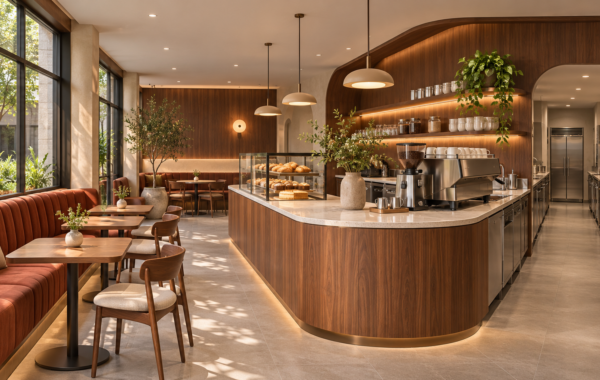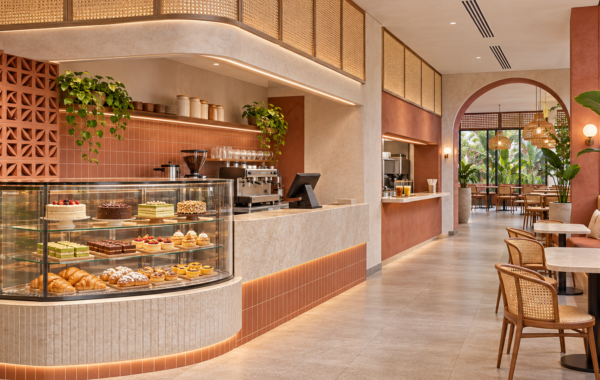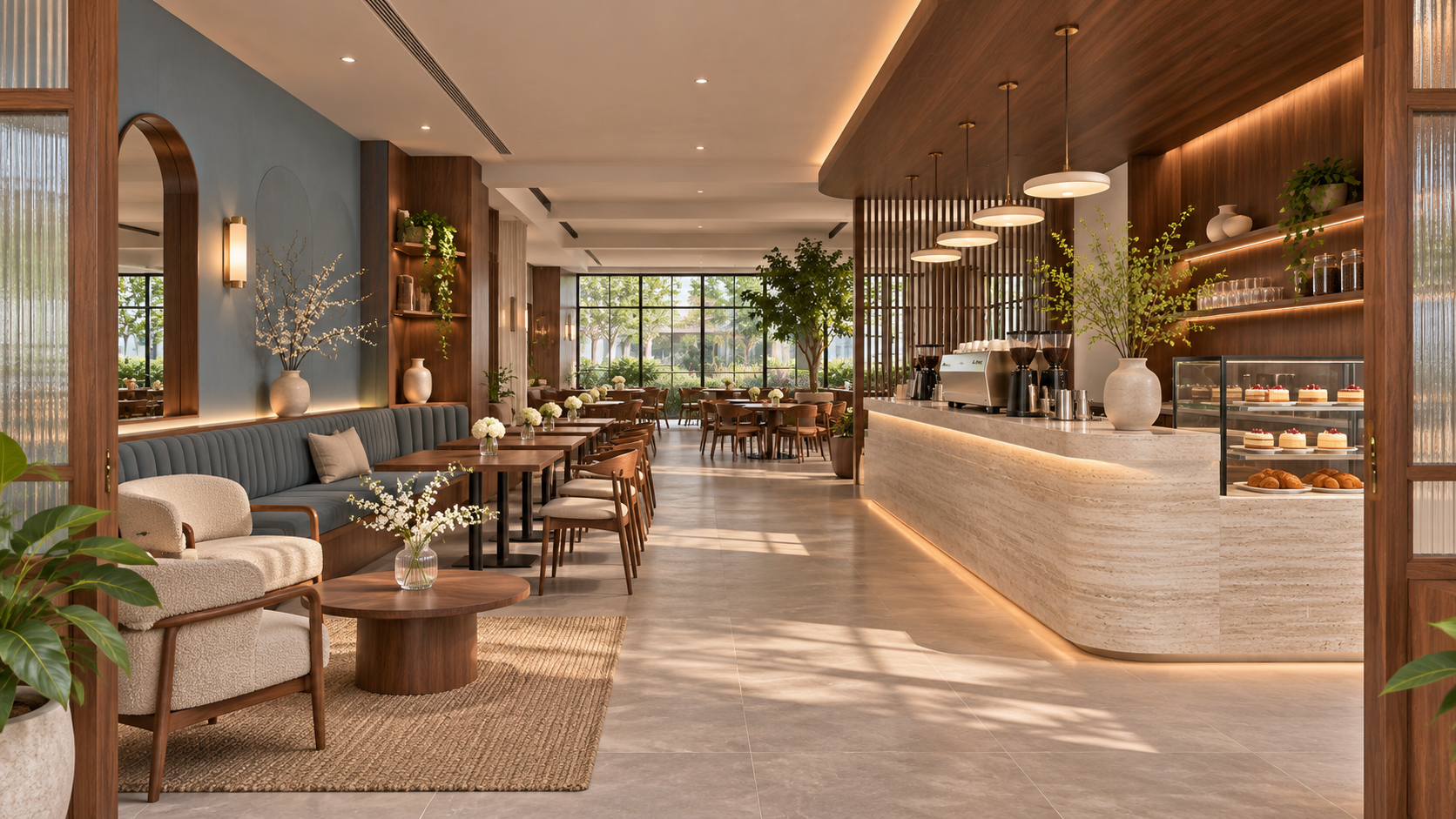

A search for cafe renovation in Selangor can produce many attractive portfolios. The useful question is how each team would handle your premises, menu and decisions. Before choosing an interior designer or design-and-build team, use the portfolio to ask for evidence of relevant work and a clear explanation of the service being offered.
This guide helps a first-time owner compare teams consistently. A striking photograph is a starting point: it can show a design direction, but it does not explain the brief, the team’s role, the revisions or what was eventually built. Collect that context before deciding whether a project is a useful reference for your cafe.
Begin with the project you actually need
Give each shortlisted team the same short brief: outlet location, current premises condition, intended menu, service model, approximate size and target opening window. State which details are confirmed and which remain assumptions. Include the tenancy or landlord information you can legitimately share, without treating an early brief as a completed technical survey.
Decide what support you are seeking. Concept design, detailed drawings, procurement coordination and construction delivery are different responsibilities. Ask each team to describe its proposed involvement in plain language. A portfolio comparison becomes more useful when the services behind the images match the services you want to appoint.
Ask who did what in the featured project
Choose two or three relevant examples and ask the team to explain its role in each. Was it responsible for the interior concept, detailed design, site coordination, construction, styling or a combination? Establish whether the images show a completed project, a proposed design or another kind of visual. Record the answer beside the example.
Ask which parts were new and which were retained. A beautiful existing floor or facade may have been outside the renovation scope. Understanding the boundary helps you judge the actual contribution. Do not assume that every consultant, supplier or contractor involved in a project was employed or managed by the firm presenting it.
Look beyond a matching visual style
Select examples with an operational challenge comparable to yours: a compact service counter, a shoplot with limited daylight, a bakery display or a mix of takeaway and seated guests. Ask how the layout responded to that challenge. Request an explanation of the design decision rather than a promise that the same appearance will produce the same business result.
For a Selangor outlet, discuss who will review the specific premises, coordinate equipment information and clarify project-specific requirements with the appropriate parties. A project in the same town can still have a different building condition or service arrangement. Location alone does not make two renovations equivalent.
| Evidence to request | Useful question | What to record |
|---|---|---|
| Project context | What was the owner trying to achieve? | Brief and constraints |
| Team role | Which work did your team deliver? | Scope and collaborators |
| Design development | What changed between concept and completion? | Decision and reason |
| Operational detail | How was the counter or service route resolved? | Relevant drawing or explanation |
| Client reference | May I speak with a client who has agreed to a reference? | Permission and practical feedback |
Use references to understand the working relationship
The RIBA guide to working with an architect recommends reviewing relevant experience and following up client references about communication and responsiveness. Its UK architect guidance is not a statement of Malaysian appointment requirements; those selection questions are nevertheless useful prompts for a cafe owner.
With permission, ask a reference how decisions were recorded, how questions were answered and how changes were handled. Ask what information the owner had to provide. Keep the conversation factual and respectful. A reference is one source of context, not proof that your different project will have an identical cost, programme or outcome.
Review details and the proposed communication process
Ask to see an appropriate sample of the team’s drawing or specification approach, with confidential client information removed. Follow one feature from the visual into the practical detail: a counter edge, a built-in seat or a material junction. Ask how an unresolved question becomes an agreed decision and who receives the updated information.
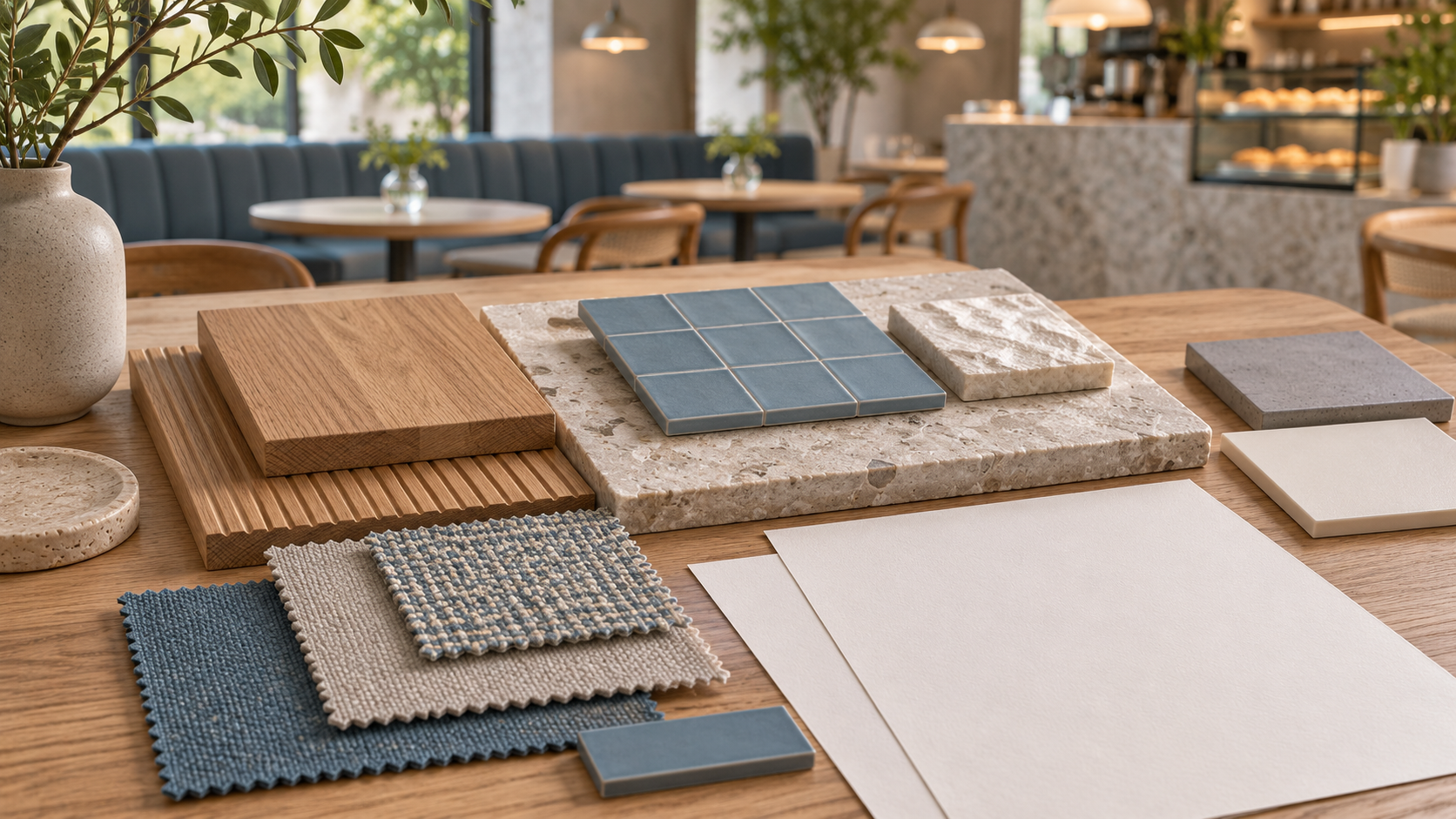
Discuss the regular contact person, meeting arrangements and how approvals will be recorded. Clarify who will answer construction questions and how proposed changes are reviewed. The cafe materials guide provides useful examples of operational questions that should accompany a finish selection.
Summarise the portfolio evidence and unanswered questions
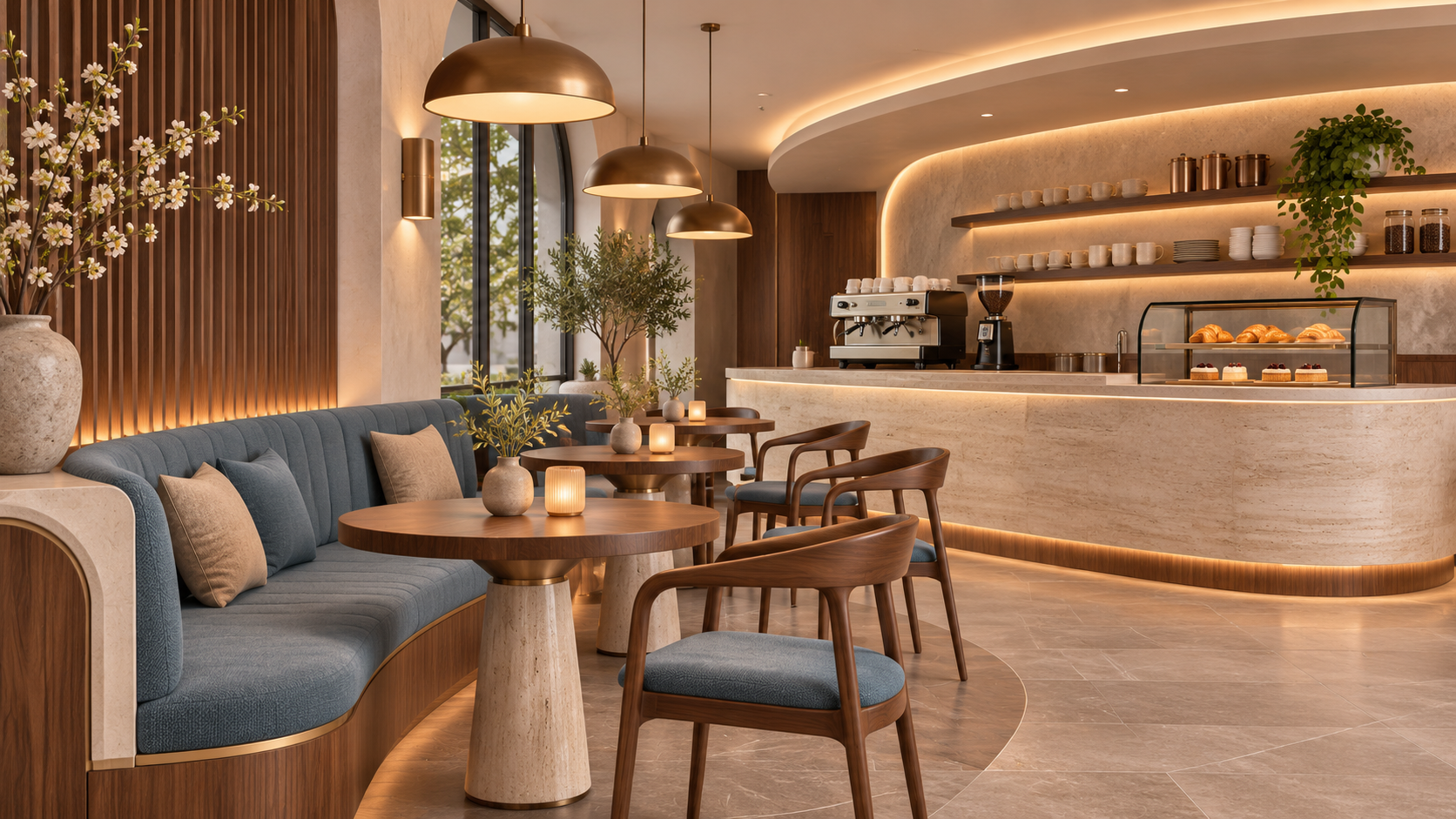
Prepare a portfolio evidence summary with the same headings for each example: relevant challenge, named responsibilities, design decisions, completed details, reference permission and outstanding questions. Mark missing answers as unresolved. A smaller but well-explained portfolio may be more relevant to your brief than a larger collection of unrelated imagery.
Finish the review by identifying what the examples establish and what they leave unanswered. Ask for clarification before assuming that a portfolio feature is included in your own scope. Keep this evidence summary with the project brief; the later appointment and scope discussion can then refer to specific examples instead of a general impression.
Frequently asked questions
Should I select a designer from photographs alone?
Use photographs to identify a direction, then ask about the project brief, the team’s role and relevant delivery details.
Do I need a team with an identical cafe in its portfolio?
An identical concept is not essential. Look for relevant challenges and a clear explanation of how the team would adapt its approach to your premises.
What should I bring to the first discussion?
Bring your menu, service model, premises information, priorities and a few annotated references. Clearly identify information that is still uncertain.
Discuss your cafe project with APIO
Share your premises, menu, project stage and priorities through the APIO project planner. Tell us which design decisions are still open so the first discussion can focus on the scope your outlet actually needs.