
APIO JOURNAL · F&B DESIGN & BUILD · SELANGOR
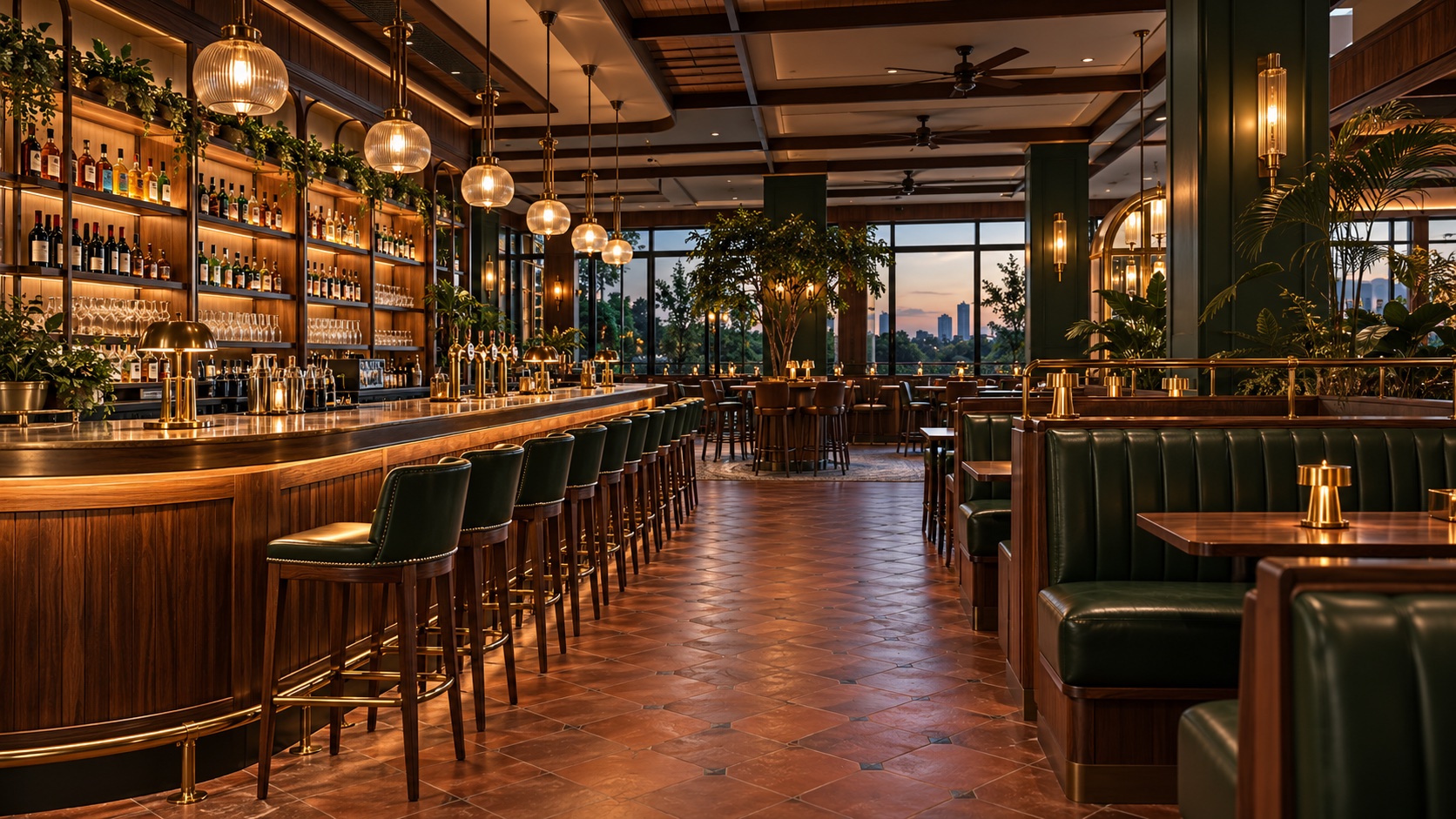
A pub renovation in Selangor should make the bar easier to operate as well as improve the atmosphere. Before choosing a counter finish, trace how orders, drinks, clean glasses, used glasses and stock move through the space. Those routes determine whether the team can work comfortably during a busy service.
This guide focuses on the physical service bar. It is useful for a first outlet or a franchise branch adapting a standard bar concept to a new premises. Licensing, permitted use and site-specific technical requirements should be checked separately with the relevant authorities, landlord and qualified advisers.
Draw the sequence behind one order
Start with an example order that reflects your actual menu. Mark where the order is received, where glassware is selected, where ingredients and equipment are accessed, where the drink is prepared and where it is handed over. Repeat the exercise for a different type of order.
If the same person repeatedly crosses the bar to collect basic items, review the placement before adding more equipment. If a server must enter the preparation zone to collect drinks, define a collection point. The aim is a clear sequence that fits your operating model, not a universal bar layout.
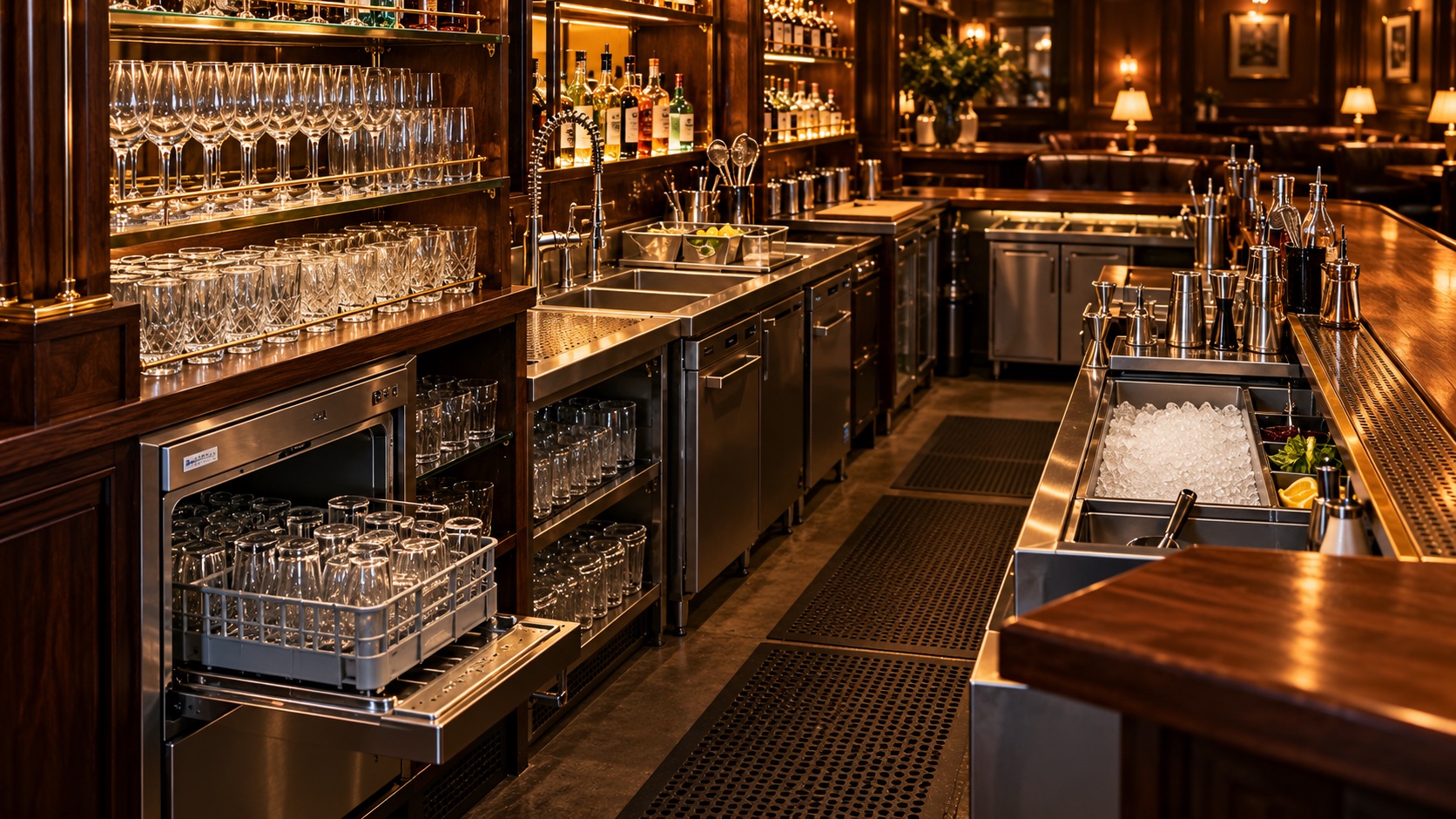
Keep the return route visible in the plan
Used glasses need a defined return location and a route to washing. Clean glasses then need protected, accessible storage. These steps are easy to overlook in a concept image, but they shape daily work.
Discuss the washing arrangement and equipment with the appropriate supplier. Confirm connection requirements, handling space and service access before finalising cabinetry. Avoid positioning dirty returns where they compete with finished drinks for the same surface.
| Bar zone | Planning question | Common design conflict |
|---|---|---|
| Order and payment | Where does the transaction happen? | Waiting customers block collection |
| Preparation | Which items are reached most often? | Staff repeatedly cross each other’s work area |
| Collection | How do servers identify and collect orders? | Collection interrupts preparation |
| Glass return and washing | How are used and clean items separated? | Returns occupy the finished-drink surface |
| Stock and waste | How is replenishment handled during service? | Boxes or bins occupy circulation space |
Coordinate equipment before drawing the counter details
Prepare a schedule of refrigerators, ice equipment, washing equipment, point-of-sale devices and any specialist systems relevant to the menu. Record the selected model, dimensions, installation clearances, connection details and maintenance access.
A nominal opening in the cabinetry is not enough. Consider how equipment will enter the premises, how doors open and how a technician will reach it later. Have the responsible specialists verify electrical, drainage and ventilation requirements. Avoid generic capacity assumptions based only on the previous tenant’s setup.
Choose materials for the job they must perform
Divide the bar into customer-facing, working and wet-use surfaces. The appearance can be coordinated without treating every surface identically. Ask suppliers about suitability for the intended use, cleaning methods, edge details and maintenance requirements.
Review joints and interfaces with the contractor: where the counter meets a wall, where equipment meets cabinetry and where water may collect. A finish sample alone does not answer those questions. Request a detail or sample assembly for a critical junction before committing to the whole bar.
Balance atmosphere with tasks and cleaning
A dim customer area does not mean every working area should be equally dim. Plan lighting so staff can identify items, handle orders and clean effectively. Discuss separate control of decorative and working light, then test the intended settings on site.
For a fuller discussion of lighting scenes, read APIO’s pub lighting design guide. This bar-layout article complements that guide: it addresses service and maintenance decisions that lighting alone cannot solve.
Test a busy-service scenario before construction
Use tape or a simple mock-up to represent the counter and equipment. Ask the intended operating team to walk through ordering, preparation, collection, glass return and replenishment. Note conflicts rather than treating the exercise as proof of a particular sales capacity.
For a multi-outlet brand, record what must be consistent across branches and what changed for this site. An equipment and workflow standard is more useful than copying a counter length without considering the new premises. Keep a written decision log so changes do not disappear between design and procurement.
Frequently asked questions
Should we design the bar or seating first?
Develop them together after confirming the operating concept. A bar that consumes too much space can constrain circulation; seating decisions can also affect service routes.
Can we reuse an existing bar?
Possibly, if its condition, layout and services suit the new operation. Assess retained components and required changes before making reuse part of the budget.
What information helps a designer start?
Provide the menu, service method, equipment list, site plan, photographs and intended staffing arrangement. Identify the features you want to retain and the problems you want to solve.
Prepare a useful brief for your Selangor pub renovation
Use APIO’s F&B project brief guide to organise the information. Then submit the location, concept and proposed scope through the APIO project planner. Start with how the bar needs to work, so its appearance supports the business you intend to run.
Tell us about your F&B project
Share your location, outlet concept, budget and scope with APIO using the enquiry form below.