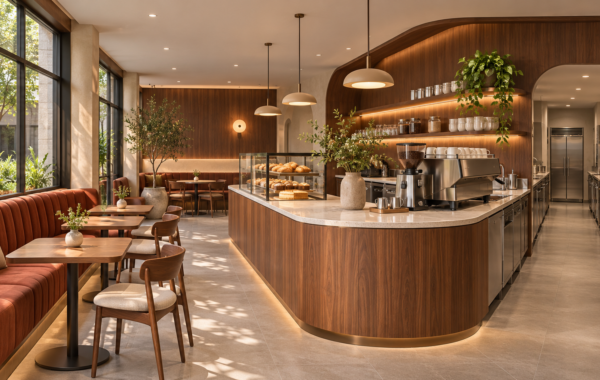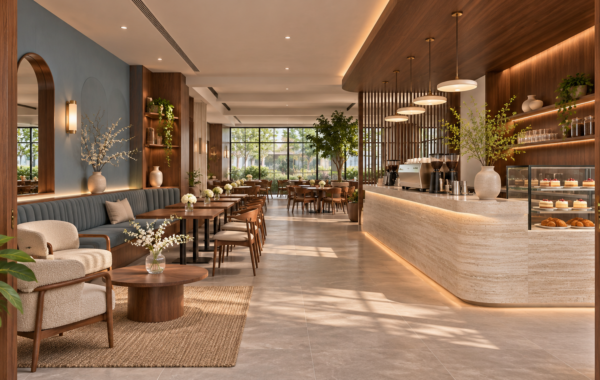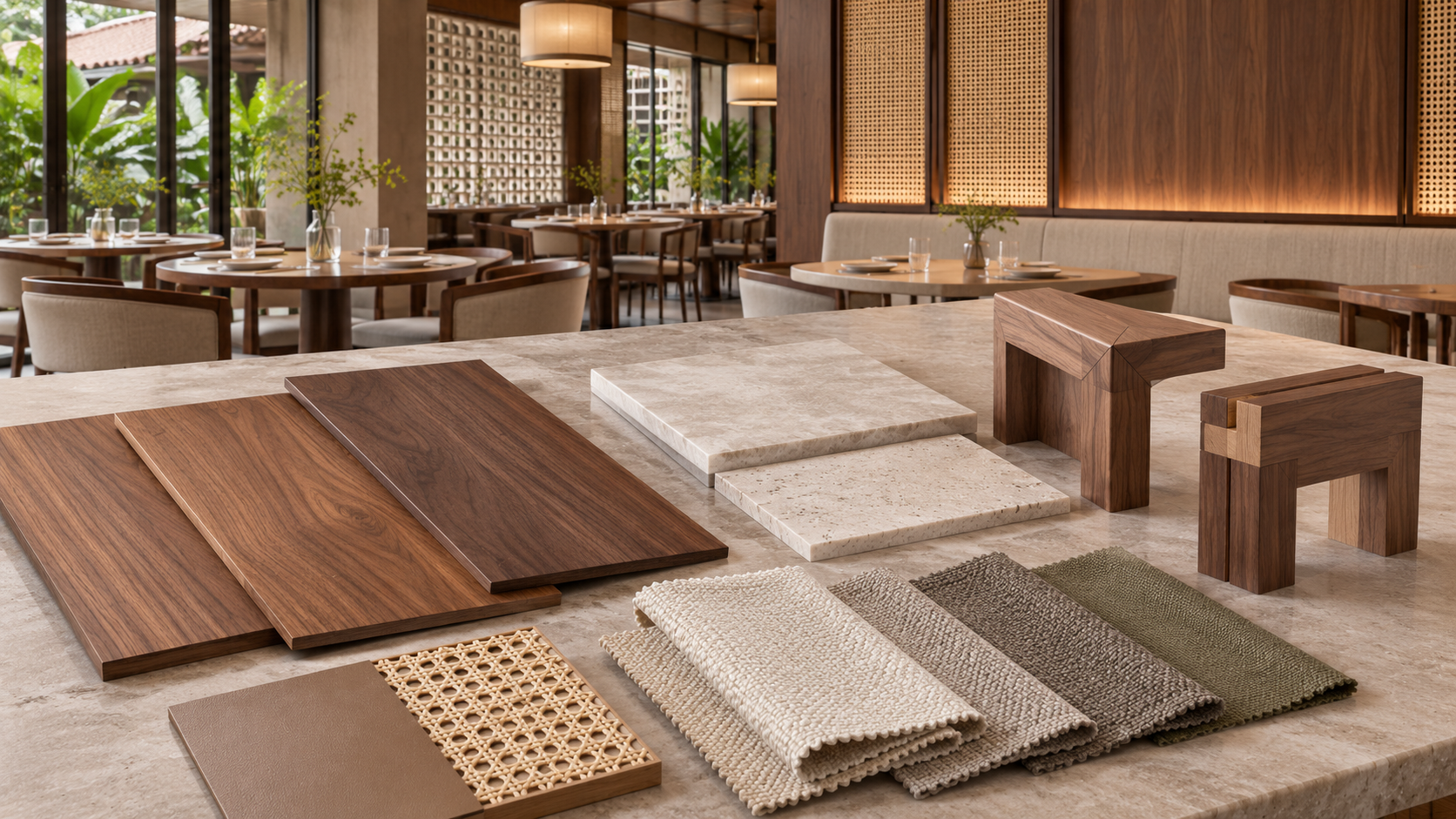

A proposed replacement finish can look close to the original sample while changing the way a restaurant is built or maintained. Before accepting a substitution for a Selangor branch, ask what is changing beyond colour: product specification, edge detail, installation method, cleaning routine or future replacement availability. A photograph marked “similar” is a starting point for discussion, not a complete decision.
This review is useful when an approved item becomes unavailable or a supplier proposes an alternative. Its purpose is to compare one specific replacement against the agreed requirement. It does not establish technical suitability by itself. Give the relevant designer, supplier or specialist the information needed to assess the actual application.
Define what the original selection was meant to do
Find the latest approved material schedule, sample and detail for the affected location. Record the manufacturer, product reference, finish and intended use where known. If the original specification is incomplete, resolve that first; two teams cannot compare alternatives reliably when they are comparing different assumptions.
Describe the practical requirement as well as the appearance. A dining-wall panel, counter edge and frequently washed floor have different duties. Note the expected contact with water, food, cleaning products, chair movement or service equipment. Ask operations what staff actually do in that location instead of relying on a general description such as “commercial use”.
Ask for a comparison, not a sales description
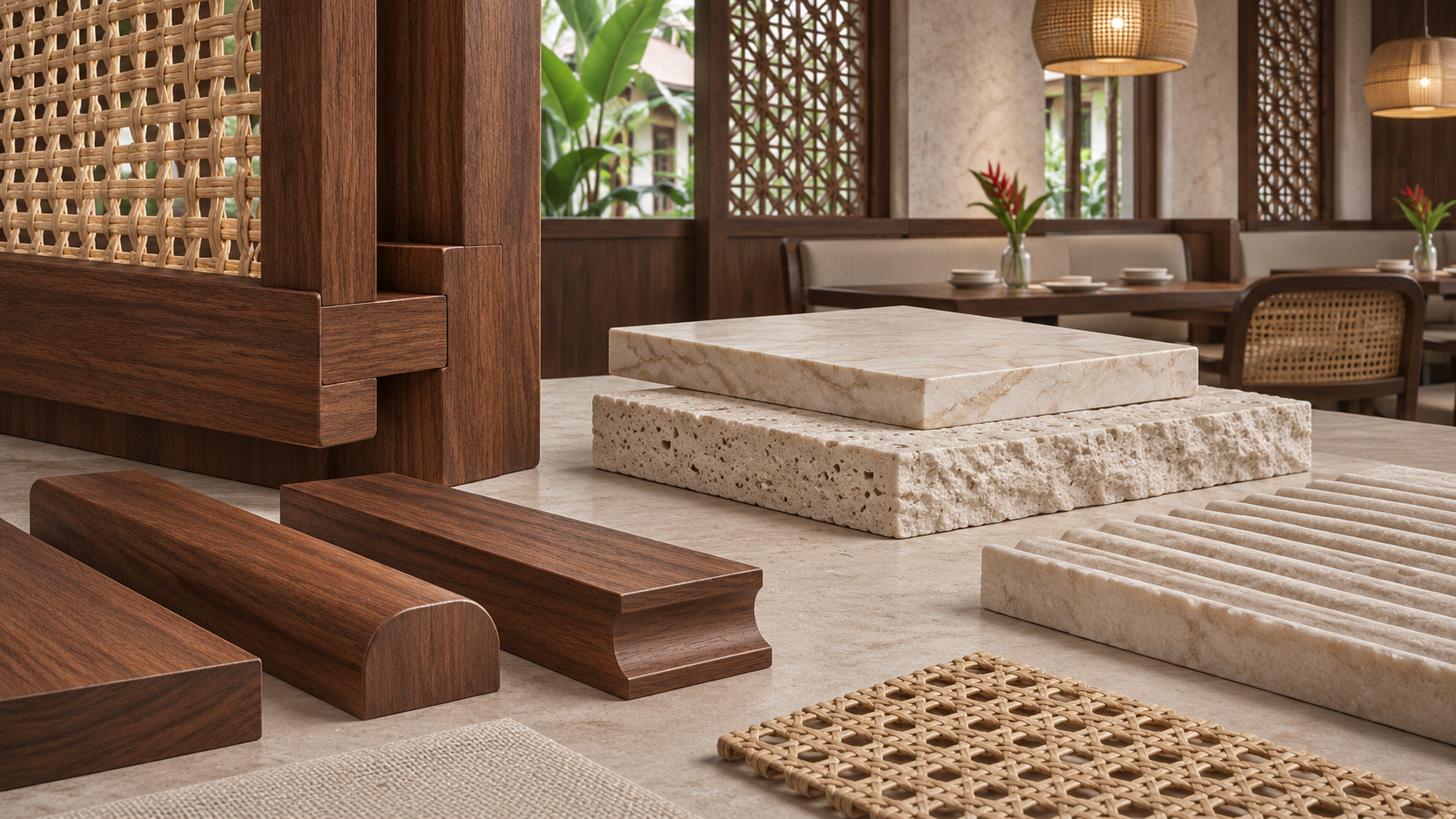
Request the proposed product identification, technical information, installation guidance and maintenance instructions. Ask the proposer to show which requirements match, which differ and which remain unverified. Keep the original and alternative information together so the reviewer can see the basis of the proposal.
CIDB’s guidance on renovation contract documents describes using drawings, specifications and quantities alongside standard terms. Keep an accepted material change consistent with the relevant project documents. This practical review does not decide contractual rights or replace the project’s agreed change process.
Use a focused substitution comparison
The following sheet helps the team identify missing information before accepting an alternative. The evidence needed depends on the product and its location; ask the responsible professional which performance information matters for the particular application.
| Review item | Question for the proposer | Record before acceptance |
|---|---|---|
| Identity | Which exact product and finish are offered? | Manufacturer and product reference |
| Use | Is the proposed application supported? | Relevant product information and reviewer |
| Junctions | Does thickness or edge treatment change? | Updated detail or unresolved issue |
| Operation | Does cleaning or maintenance change? | Supplier instructions and operator review |
| Rollout | Is this branch-only or a new standard? | Named branches and scope of acceptance |
Review the junction, not only the sample face
Place the proposed sample beside its neighbouring materials. Discuss corners, exposed edges, joints and transitions with the fabricator or installer. A change in thickness can affect an adjacent trim or alignment even when the visible surface looks similar. Ask for the relevant detail to be checked before the item is ordered or fabricated.
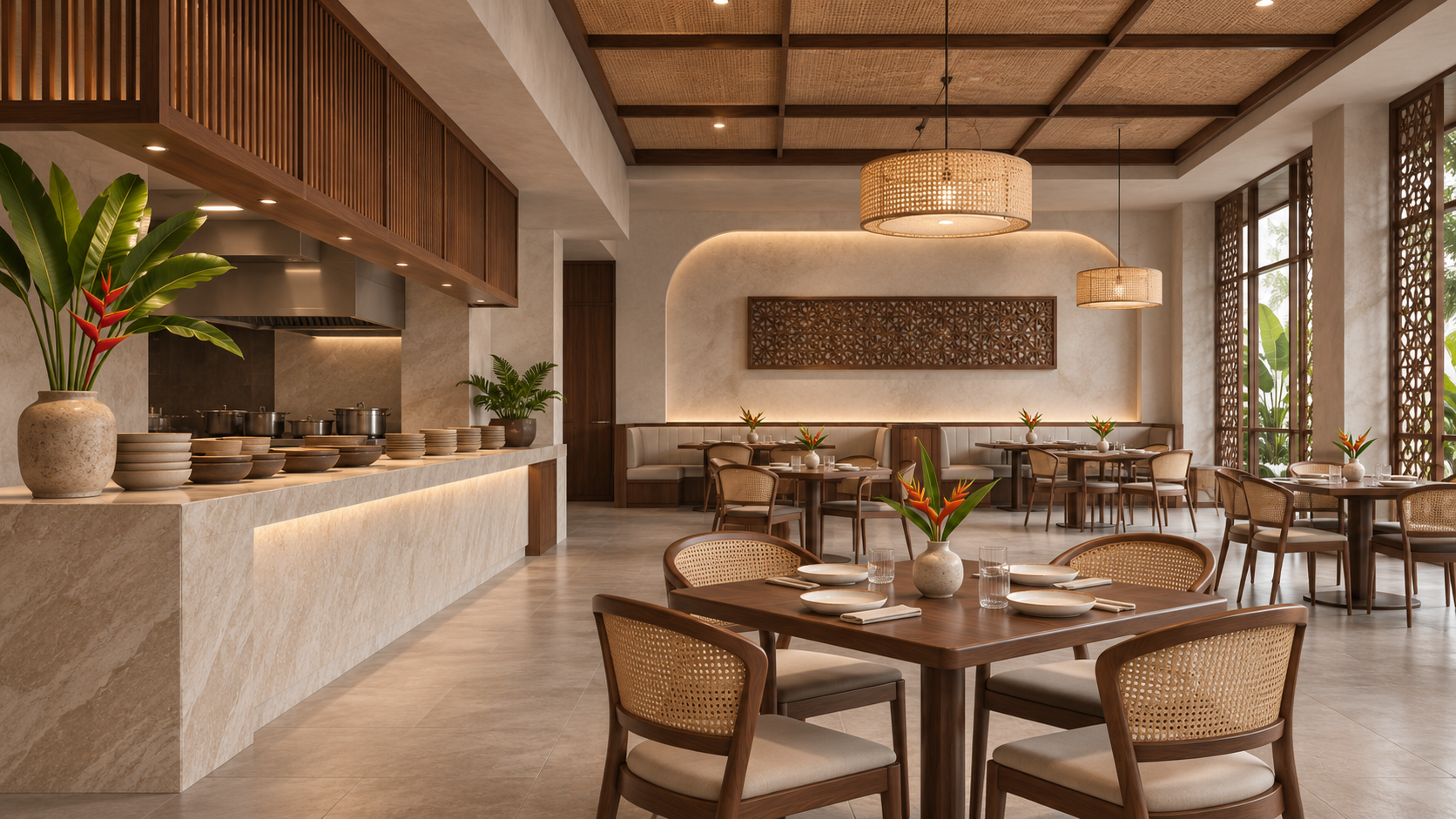
Where the appearance depends on a larger area, agree a suitable sample arrangement or mock-up. View it under the intended lighting where practical. Record what the sample demonstrates and what it does not: a small board might help assess colour, while a junction sample is more useful for discussing how two materials meet.
Include the operating and replacement consequences
Ask how staff should clean the alternative and whether the proposed routine differs from the existing branch standard. Do not assume a familiar-looking surface accepts the same cleaning products. Retain the supplier’s instructions and let the operator review whether the routine is workable for that outlet.
Check how a damaged piece could be repaired or replaced later. Ask what product references and spare information should be retained; do not treat future availability as guaranteed. For the wider financial discussion, use the restaurant renovation budget guide to organise scope questions, then obtain project-specific pricing for the actual proposal.
Separate a branch exception from a rollout standard
A replacement accepted for one location should not silently become the default for every outlet. State whether the acceptance applies to a named branch, a defined area or the future standard. Record any conditions, such as confirmation of an edge detail or review of a larger sample, and identify who closes them.
Keep the rejected and accepted options distinguishable. Give the final decision a date and reference, then communicate it to the people ordering, installing and checking the work. A material board in the office and a supplier order on site should identify the same product. If they do not, pause the affected decision and reconcile the record.
Close the review before the replacement disappears into the works
Before installation, confirm that the delivered reference matches the accepted alternative and that any conditions have been addressed. Keep a labelled sample or clear record appropriate to the material. At handover, update the branch’s finish information so maintenance staff are not working from the superseded product name.
The useful outcome is a traceable decision: why the alternative was considered, what was assessed, who accepted it and where it applies. That gives the next branch team a clear starting point without pretending that a visual resemblance proves equivalence.
Frequently asked questions
Is a cheaper alternative automatically a suitable substitution?
No. Review the required use, technical information, detailing and maintenance as well as the project-specific price. A lower supply price does not answer those other questions.
Should every material change become a brand-wide standard?
Only if that wider use has been deliberately reviewed and accepted. Record a branch exception separately so future teams do not copy it without checking.
Who should approve a substitution?
Follow the project’s agreed responsibilities. The operator, designer and relevant technical specialist may need to review different aspects before the authorised decision-maker accepts the change.
Plan your F&B project with APIO
Share your premises, menu and the decisions you need to resolve through the APIO project planner. For a restaurant, cafe or pub in Selangor, bring your current layout and operational priorities so the discussion can focus on a useful design-and-build brief. You can also use the existing enquiry form below.