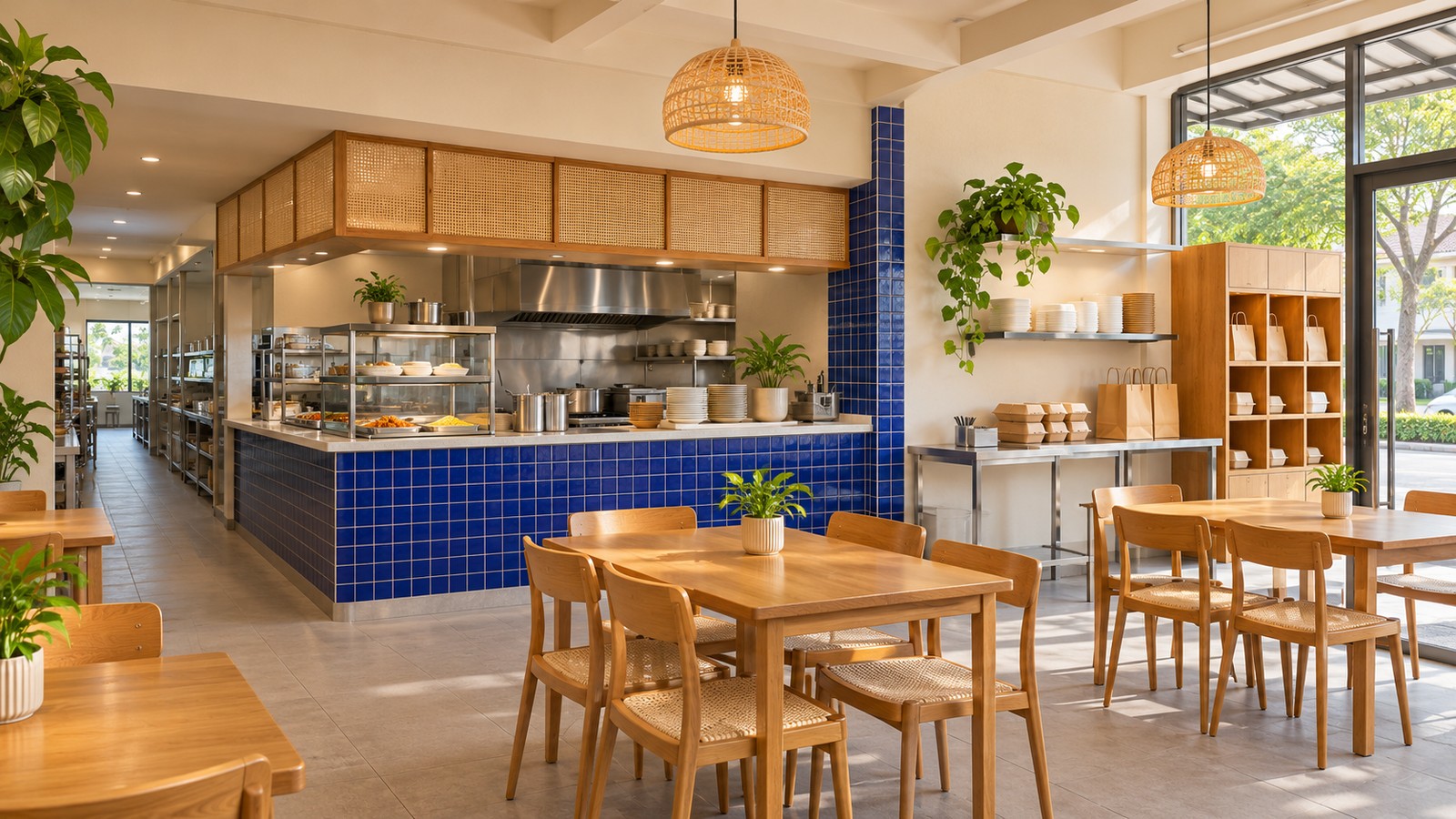

Restaurant interior design should account for takeaway packing as a working process, even when the outlet is mainly dine-in. Bags, containers, labels, drinks and completed orders need somewhere to go. If that space is left undefined, packing can spread onto the service pass or customer counter and interrupt the route to tables.
For a Selangor restaurant planning a renovation, start with the menu and a representative mix of orders. The aim is to coordinate two service paths from the same operation. This guide looks at the working area behind handover: where food becomes a complete takeaway order, how packaging is replenished and how staff manage exceptions.
Map an order from preparation to handover
Choose an order with the components your menu actually uses. Follow food from the preparation area to its container, then add drinks, cutlery or other supplied items. Identify where the order is checked and where it waits for collection. Run a dine-in order through the same period so the drawing shows both demands together.
Ask who performs each step. A position that looks efficient for one dedicated packer may work differently when the same person takes payment or carries food to tables. Keep the staffing assumption with the layout. Do not design around an extra role unless the operator intends to provide it.
Give each task a defined home
| Task | Space or information needed | Conflict to check |
|---|---|---|
| Receive completed food | Clear transfer point from preparation | Dine-in plates competing with takeaway containers |
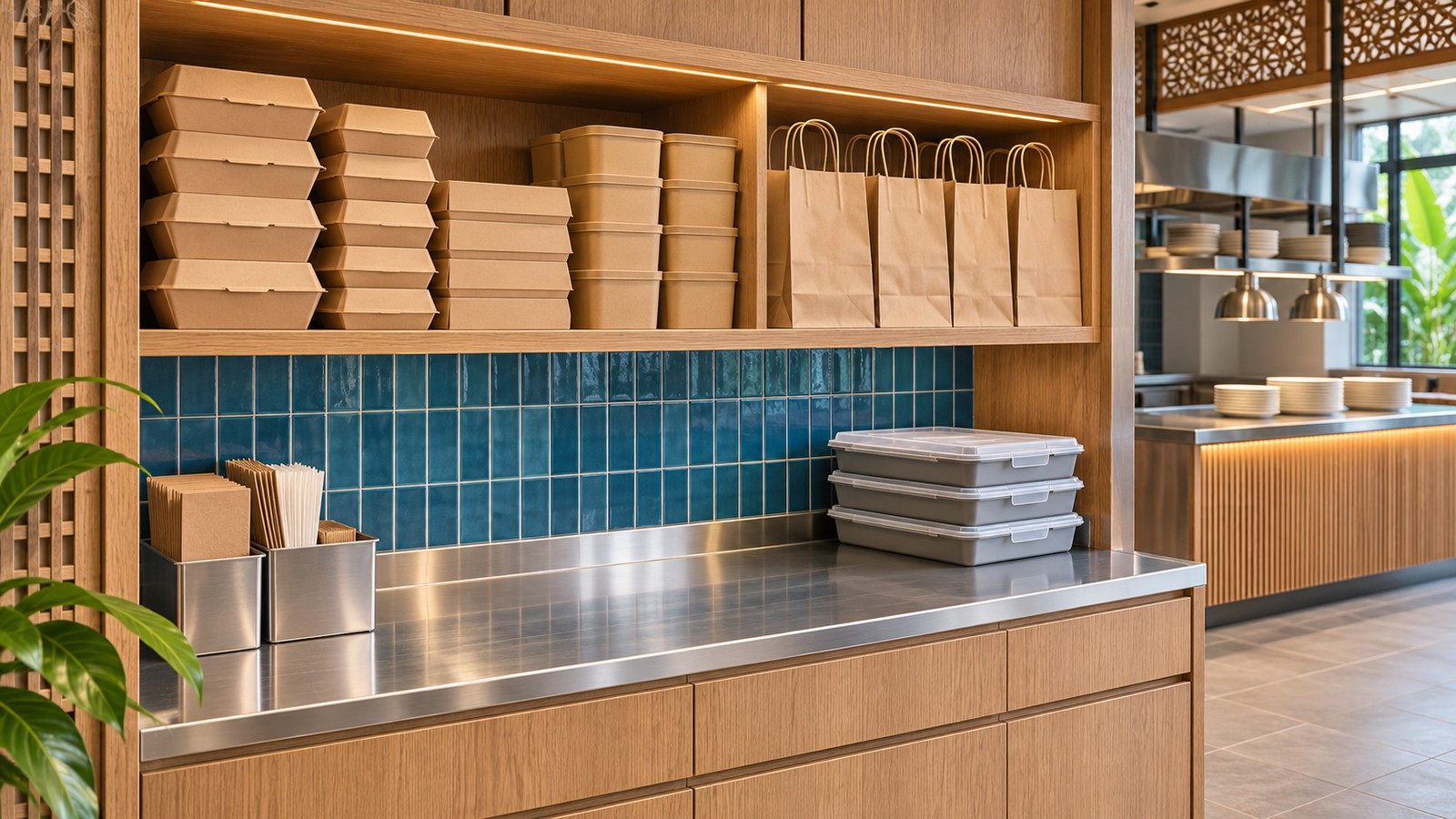
| Pack the order | Suitable working surface and current packaging | Packaging stored on the active work area |
| Check completeness | Order information visible to the responsible staff | Drinks or extras waiting elsewhere |
| Hold for collection | Agreed location and operating controls | Uncollected orders occupying the packing surface |
| Replenish supplies | Accessible stock and a restocking route | Staff crossing the service route with cartons |
| Handle exceptions | A clear process for missing or changed items | Opening finished bags on a busy counter |
Separate clean packing needs from clearing
Trace used dishes, waste and cleaning equipment as well as outgoing orders. Ask the operations team to define the separation and handling controls needed for the menu and process. A convenient empty surface should not automatically become a packing location if it also receives returned crockery.
The CDC identifies contamination involving equipment and surfaces among restaurant outbreak contributing factors. This supports reviewing how clean packing activities interact with other tasks. It does not establish a Malaysian layout approval or prescribe a universal counter dimension; have the appropriate food-safety and project professionals review the actual operation.
Design storage around real packaging
Bring samples of the containers, lids, bags and other supplies to the design review. Record how they arrive, how they are stored and how the team takes them during service. A shelf that fits one displayed container may not suit a carton or a working stack. Keep frequently needed items within the agreed packing position while giving reserve stock a separate home.
Discuss how packaging changes will be managed. If the menu introduces a different container, check its effect on storage, the packing surface and handover. Avoid fixing every shelf around an unconfirmed packaging sample. Consider adjustable storage where the project team finds it suitable for the operational and cleaning needs.
Keep collection from pulling staff through the dining room
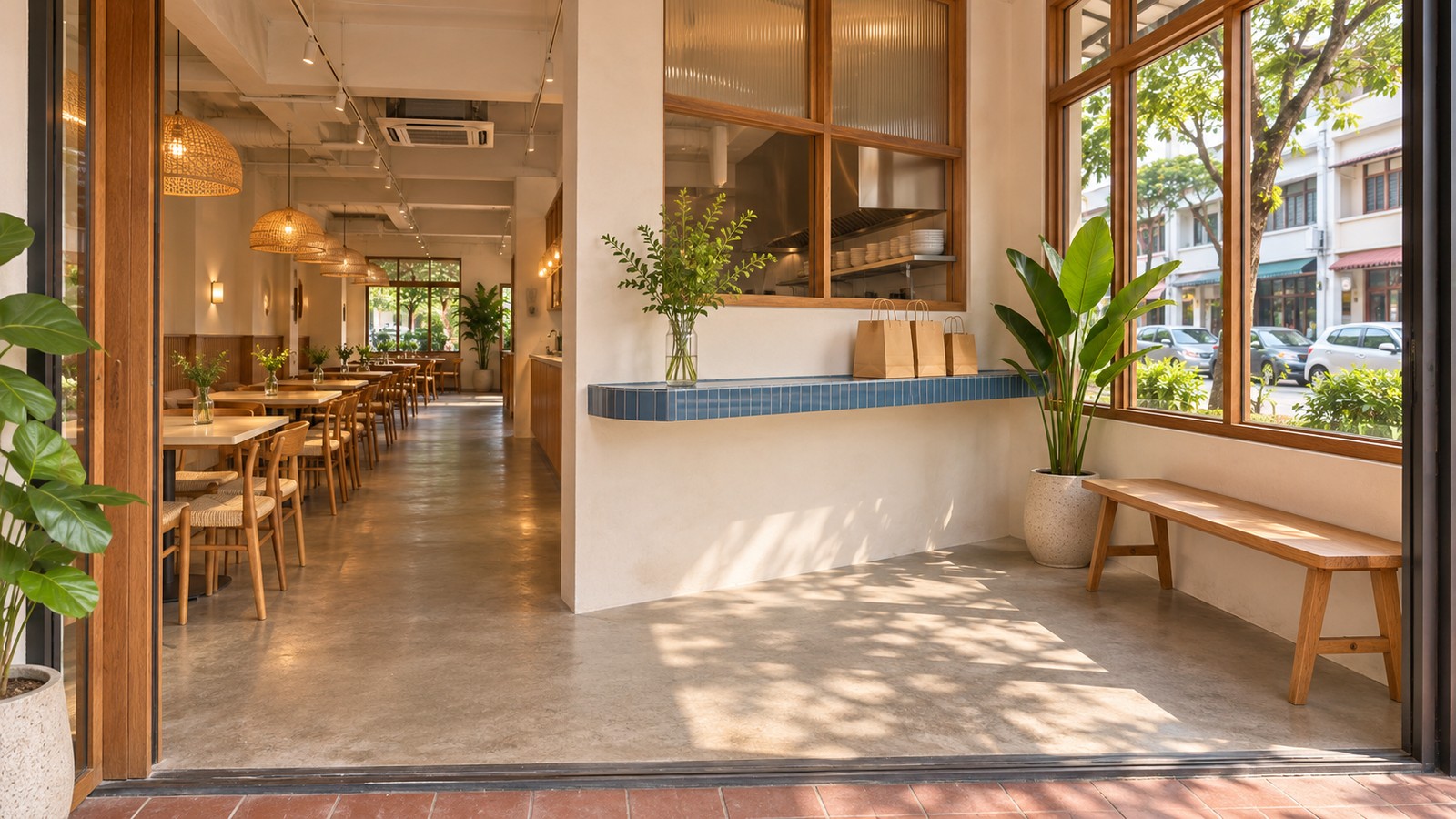
Draw the route from the packed order to the collection point. Check how a waiting customer or rider identifies the correct handover location and how staff communicate delays. Review the route alongside arrivals, payment and table service, using the actual entrance and counter arrangement.
Keep collection capacity separate from claims about food holding. The operations team must define how orders are managed for their actual products. An attractive shelf is not a temperature-control strategy. Record any equipment or process requirements before the counter design is finalised, and include them in the renovation scope.
Test the layout with simultaneous activity
Walk through a short scenario: a dine-in order leaves the pass, a takeaway order needs a drink, another order is collected and packaging needs replenishing. Identify where staff pause, reach across another person or move items twice. Ask whether the cause is position, storage, order information or responsibility before changing the layout.
Then test an exception, such as an uncollected order or a missing item. Agree where the team resolves it without consuming the only packing surface. Record outstanding questions in the APIO project planner with the menu, equipment information and a marked-up plan.
Before signing off, confirm the packing position, packaging samples, reserve storage, collection route, clearing route and responsible staff roles. Keep associated joinery and equipment in the restaurant renovation budget so the operational arrangement and scope stay aligned.
Frequently asked questions
Does every restaurant need a separate takeaway room?
No universal room arrangement suits every operation. Define the tasks and concurrent demand first, then have the project team determine an appropriate working position and separation.
Can the cashier also pack orders?
The operator should test the intended staffing arrangement against payment, order checking and handover tasks. Record where the person needs to be and which duties compete at the same time.
Should the packing area be visible to customers?
Visibility is a design choice to review with the operating process. Check presentation, information, circulation and working requirements together; visibility alone does not establish that the area functions well.
Tell us about your F&B project
Share your premises, menu and design priorities through the APIO project planner or the enquiry form below. Include the questions you want the project team to help resolve before renovation.