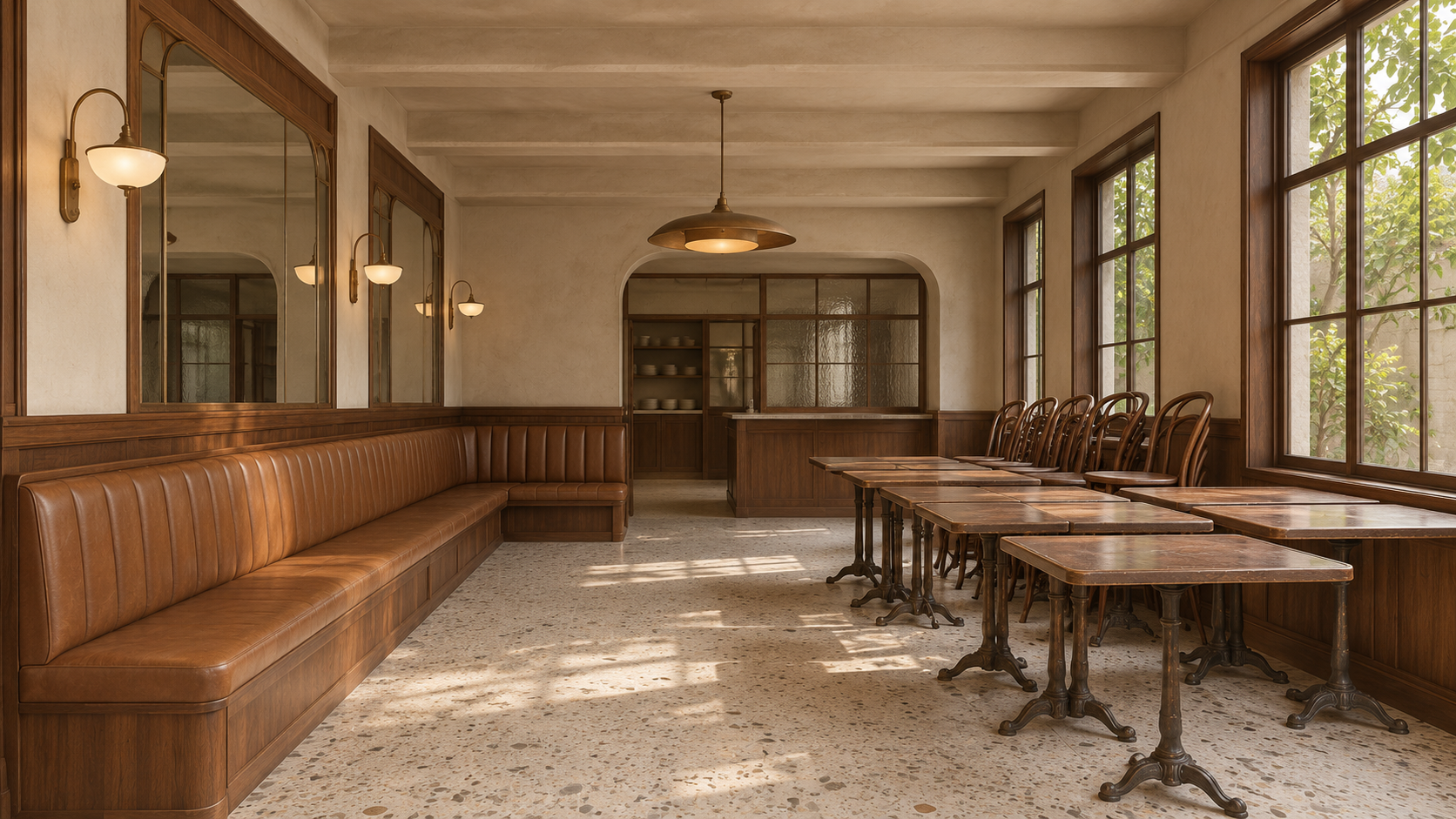
Restaurant Renovation: Decide What to Retain Before Stripping Out an Existing Outlet

An existing restaurant can contain useful fittings and expensive problems in the same room. Before stripping out a Selangor outlet, decide what is worth retaining through a documented review. The aim is to avoid removing a suitable item by default while also avoiding a design that depends on an unverified installation.
This is a retain-and-remove planning exercise for a first-time owner after a premises has been identified. It is different from choosing between units. You are now turning the actual condition, proposed menu and new layout into clear instructions for the project team. Do not treat a neat appearance as evidence that equipment or services are suitable.
Create an inventory before making removal decisions
Walk the premises with the appropriate project team and give important existing items a reference. Include loose furniture, fixed joinery, doors, floor finishes and visible equipment. Photograph each item and its immediate surroundings. Record what you can see, what documents exist and what remains inaccessible. Avoid writing “good condition” where only the visible face has been inspected.
Ask who owns each item and whether it may remain, be altered or be removed under the agreed premises arrangements. A useful fitting may belong to another party. Keep that question separate from technical condition. Mark uncertain items as unresolved so the contractor does not interpret silence as permission to dispose of them.
Use four decisions instead of one vague keep list
Classify items as retain, retain subject to verification, remove, or unresolved. The conditional category is especially useful where inspection, testing or a service history is needed. For each condition, identify the evidence and person who can close it. A deadline can help coordination, but it should not turn missing evidence into automatic acceptance.
The US EPA’s construction-material guidance includes preserving existing buildings and salvaging materials within its waste-reduction approach. That supports considering reuse early. It does not establish whether a particular fitting is suitable for your restaurant, nor does it guarantee a saving. Make the decision from the actual condition, proposed use and project-specific costs.
Build a retain-and-remove decision sheet
| Item or area | Decision to investigate | Evidence or action |
|---|---|---|
| Dining furniture | Retain if suitable for the new layout | Condition, quantity and proposed placement |
| Fixed counter | Retain, adapt or remove | Measured size, service needs and junction review |
| Existing equipment | Retain subject to specialist assessment | Identity, condition and operating requirements |
| Floor finish | Retain or replace affected areas | Condition and new-work interface review |
| Unidentified installation | Keep unresolved until assessed | Responsible specialist and inspection scope |
Test retention against the new operating layout
Place the retained items on the proposed plan using verified measurements. A counter that fits the room may still conflict with the new menu, collection point or staff movement. Review its useful storage, access for cleaning and the equipment it must support. Do not bend the entire operating layout around an item solely because it already exists.
For cafe or pub furniture, try realistic arrangements rather than counting pieces in a store room. Include the way staff move chairs and serve tables. If an item needs adaptation, describe the adaptation clearly enough for the relevant trade to assess it. Separate the existing item’s condition from the suitability of the proposed modification.

Compare the complete retention scope
Ask for project-specific allowances covering inspection, repair, adaptation, protection and any temporary relocation. Compare those with the actual replacement scope. Retaining a surface is not a complete saving if its edges, junctions or surrounding services need substantial work. Equally, a visible scratch does not by itself explain why an otherwise suitable item must be discarded.
Use the restaurant renovation budget guide to organise the scope discussion, then obtain quotations for the actual alternatives. Keep uncertain work identifiable rather than merging it into a single optimistic allowance. Record what would trigger reconsideration, such as a specialist finding that the item cannot support the intended use.
Turn decisions into protection and removal instructions
Mark retained items on the relevant drawings and agree how they will be protected during adjacent work. Identify who checks their condition before work and after protection is removed. If furniture must leave the unit temporarily, record its destination and the person responsible for receiving it. Take enough photographs to distinguish pre-existing marks from later damage.
Keep removal decisions equally explicit. Ask the project team to confirm the safe sequence and any necessary specialist isolation or assessment before disturbance. Do not instruct workers to cut unknown services, remove an unidentified wall or investigate suspect material themselves. The owner’s list defines the intended outcome; competent specialists determine the appropriate method for the actual site.
Close conditional items before they become assumptions
Review unresolved items at an agreed point before dependent orders or work proceed. Record the outcome and update the plan, scope and budget consistently. If an item fails the retention review, tell every affected party what changes; a revised drawing is not enough if the original purchase decision is still being used elsewhere.
At completion, keep a short record of what was retained and any instructions supplied for it. This helps the operator distinguish an existing installation from a new one when arranging maintenance. A disciplined review produces a defensible scope, without promising that reuse is always cheaper or that everything old should be replaced.
Frequently asked questions
Is keeping an existing counter always cheaper?
No. Compare the complete scope of inspection, repair, adaptation and protection with replacement. Use project-specific quotations rather than treating the existing item as free.
Can I keep equipment that appears to work?
Ask the relevant specialist to assess its condition and suitability for the planned operation. Appearance or a brief demonstration does not resolve capacity, connections or maintenance questions.
What should happen to an item whose condition is unknown?
Mark it as unresolved or conditional, identify the assessment needed and assign a person to close the decision before dependent work proceeds.
Plan your F&B project with APIO
Share your premises, menu and the decisions you need to resolve through the APIO project planner. For a restaurant, cafe or pub in Selangor, bring your current layout and operational priorities so the discussion can focus on a useful design-and-build brief. You can also use the existing enquiry form below.