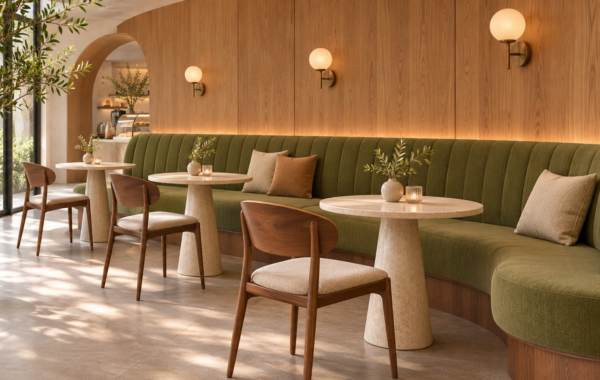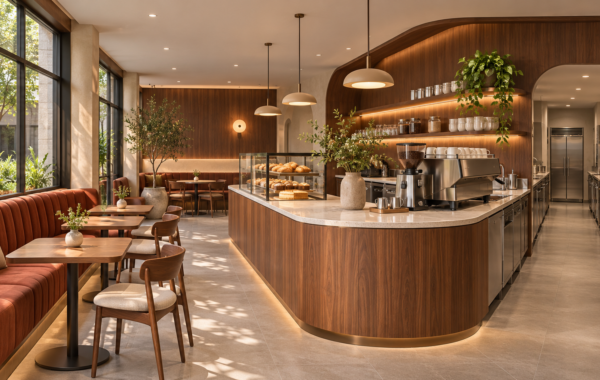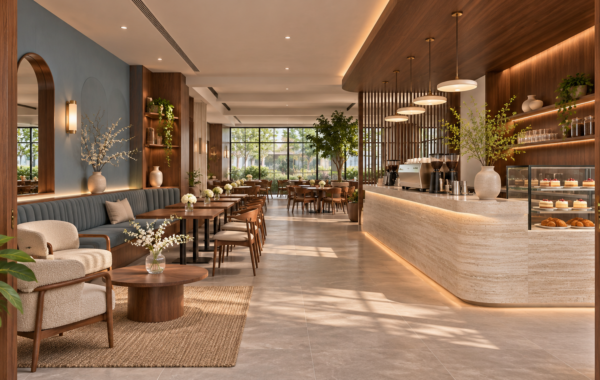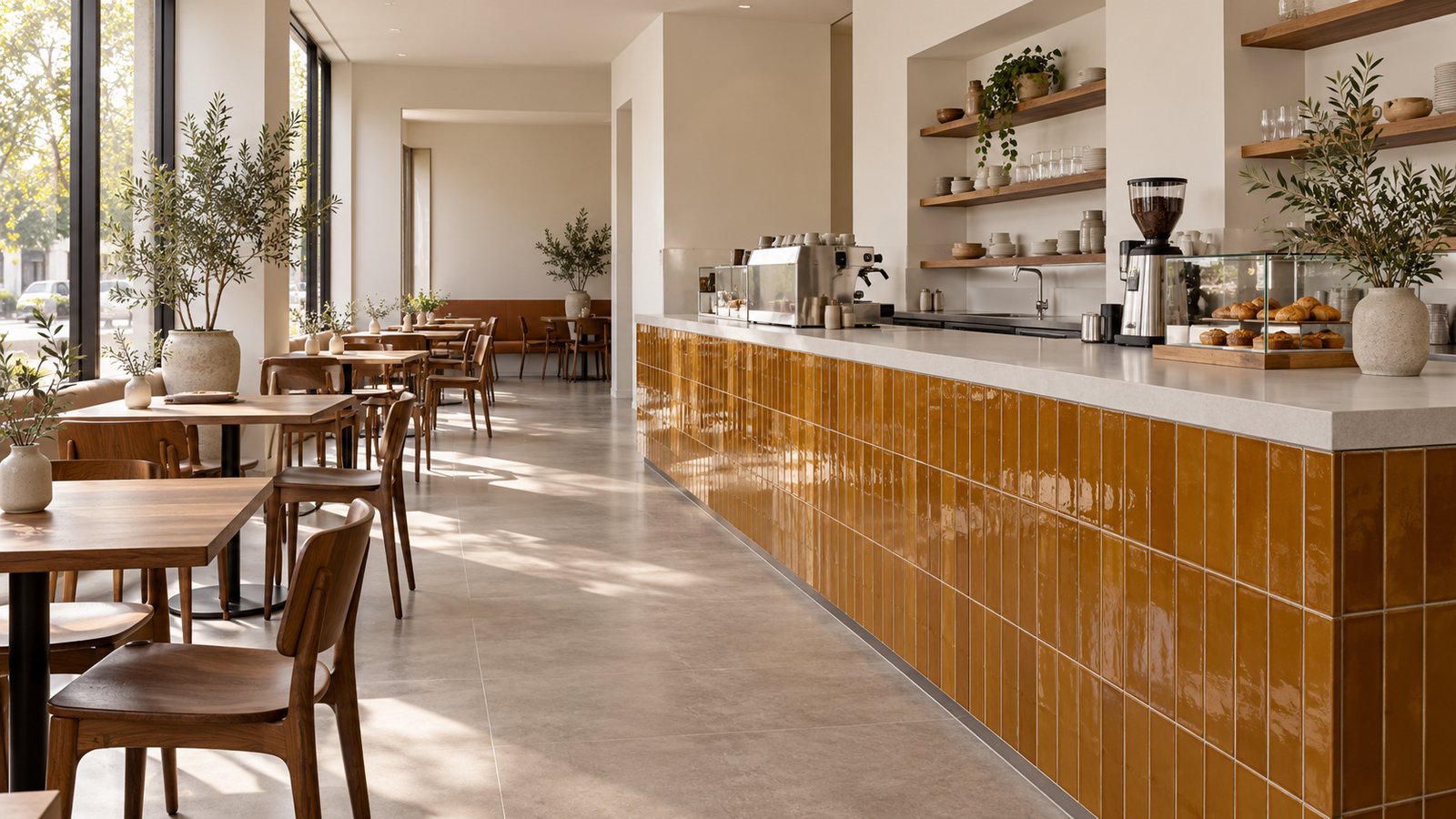

Cafe renovation materials should be selected for the way each surface will be used and maintained. A wall beside a dining table, a counter edge and a preparation surface face different demands. Choosing the same attractive finish everywhere can leave cleaning and replacement questions unresolved.
For a cafe owner in Selangor, start with a finish schedule that connects appearance to the daily routine. Ask what contacts the surface, how staff will clean it and how damage would be repaired. This creates a more useful comparison than a moodboard organised only by colour.
Describe the conditions at each location
List the main zones: customer tables, counter fronts, work surfaces, washing areas, floors and wall finishes. Record the expected contact with drinks, food, water, heat, cleaning products and moving furniture. Separate a decorative surface from a surface intended for direct food preparation.
Have the relevant designer, supplier and operations lead confirm suitability for each use. A broad material name such as “stone”, “laminate” or “timber” does not identify the complete product, finish or installation. Ask for the actual specification before treating two samples as equivalent.
Request care information before approval
Obtain the manufacturer’s current cleaning and maintenance instructions for the proposed product. Ask which products and methods are suitable, what should be avoided and whether any periodic treatment is required. Share that information with the people who will maintain the cafe.
For example, Formica’s care guidance describes mild cleaning methods and warns against abrasive materials for its laminate surfaces. This is a product-specific example, not a cleaning recipe for every finish. Follow the instructions for the exact material and cleaning products selected for your project.
| Location | Question to ask | Information to retain |
|---|---|---|
| Customer tables | How are routine spills and marks removed? | Product reference and care instructions |
| Counter edges | How are corners, joints and exposed edges detailed? | Approved fabrication detail |
| Wet-adjacent areas | Is the complete assembly suitable for the intended conditions? | Supplier and designer confirmation |
| Floors | How do cleaning, wear and intended use affect selection? | Relevant product information and review |
| Decorative walls | Can staff maintain the texture and reach the surface? | Cleaning method and access plan |
| Replaceable items | Can a damaged piece be repaired or replaced? | Supplier reference and spare-material decision |
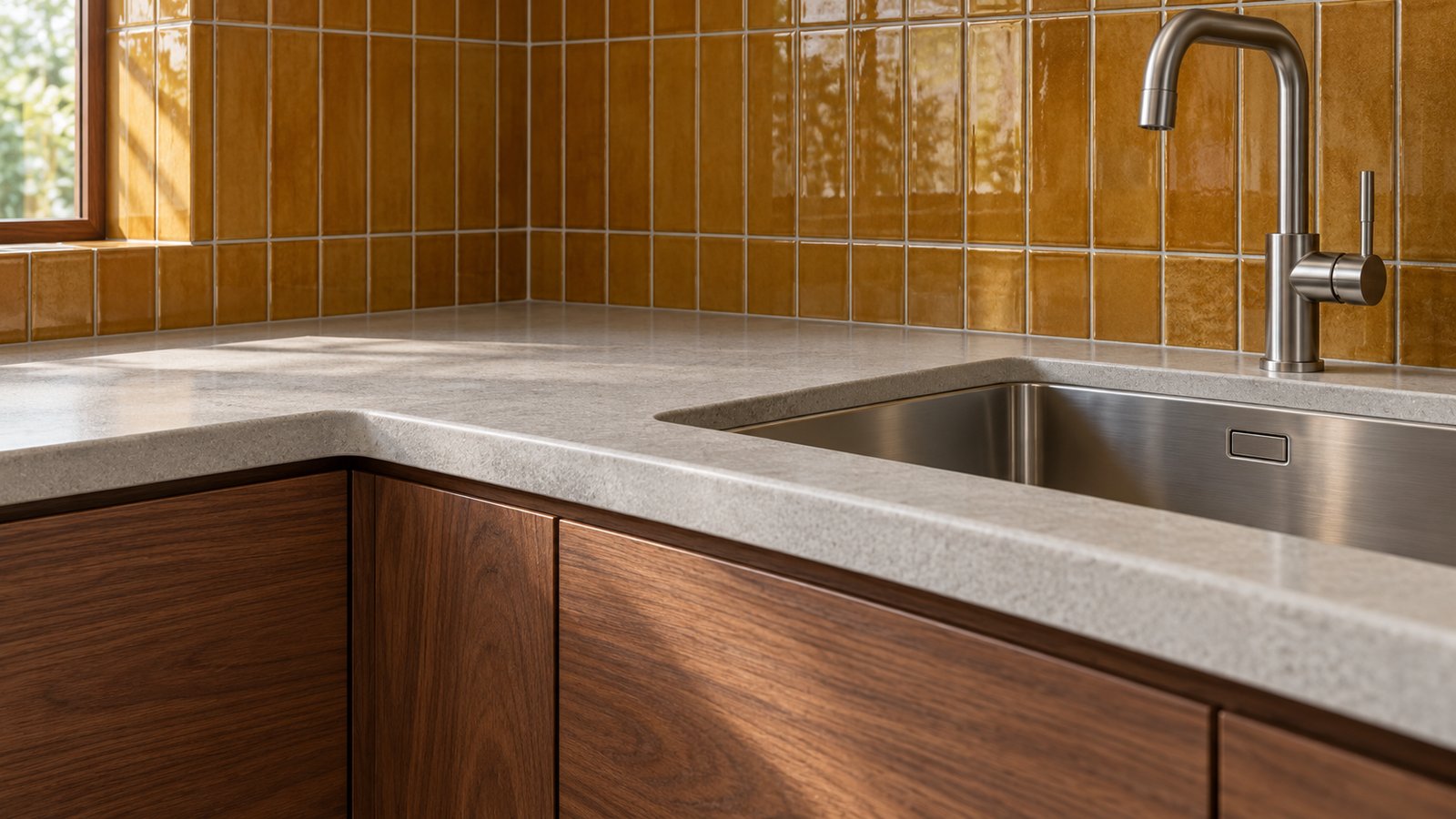
Review joints and edges as carefully as the sample
Ask to see how the proposed finish meets neighbouring materials. Review exposed edges, changes in level, corners and openings for equipment. A small flat sample does not show how those junctions will look or be maintained after installation.
Have the team identify locations where cleaning access could become difficult. Discuss removable components and access to adjacent equipment where relevant. The aim is to resolve the detail with the fabricator and supplier before it becomes a maintenance problem in the finished cafe.
Check the cleaning routine with operations
Ask staff or the future operator to describe the end-of-day routine. Which surfaces are wiped frequently, which need more detailed cleaning and which are difficult to reach? Compare the proposed finish with that routine rather than assuming the team will adopt a complicated new process indefinitely.
The World Health Organization’s Five Keys to Safer Food includes cleanliness as a core food-handling principle. Material selection supports an appropriate cleaning process but does not replace it. Agree the actual food-safety procedures and cleaning practices with the responsible operations lead.
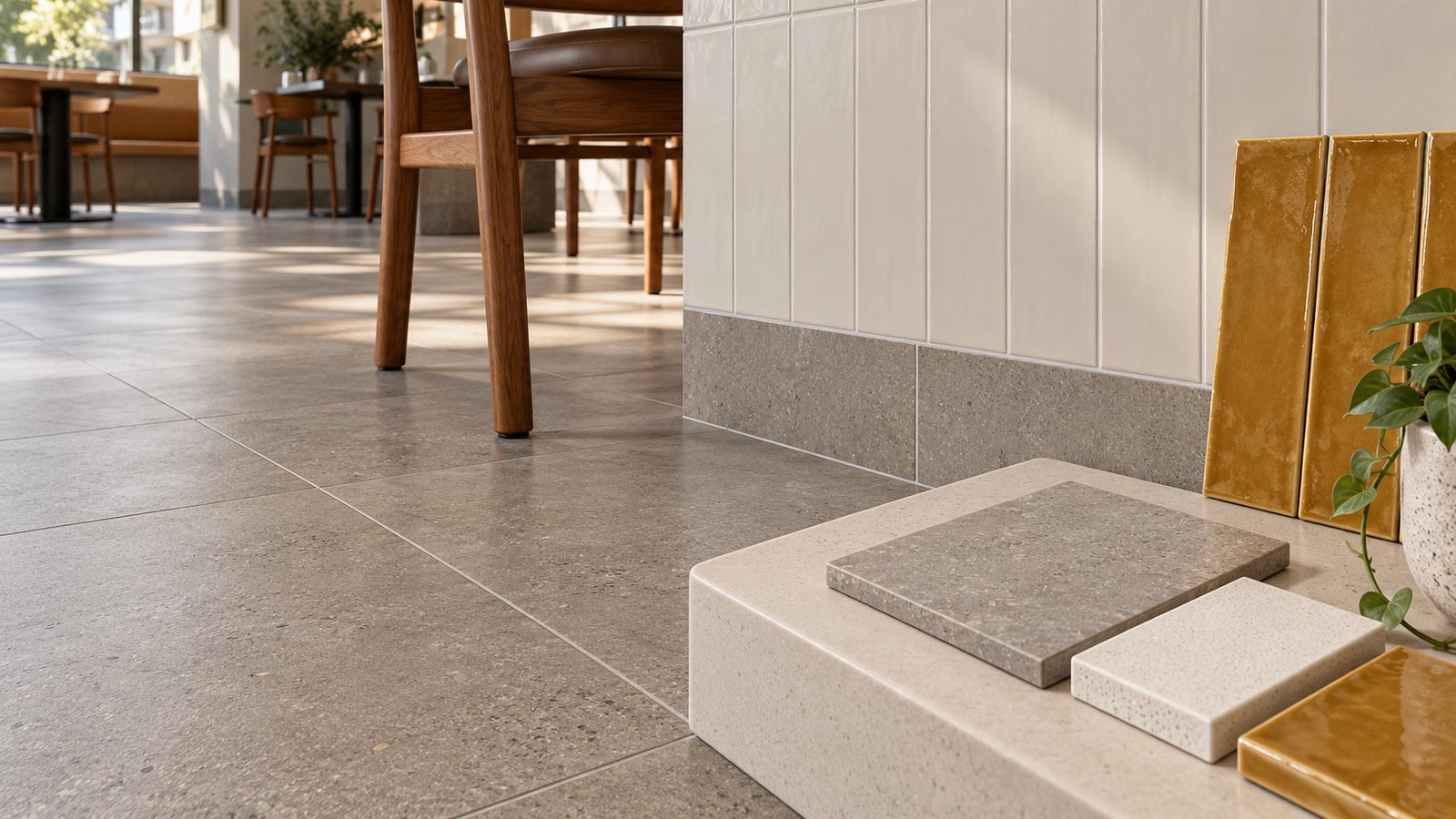
Use samples to clarify the decision
Review samples under the intended lighting and next to adjoining finishes. Ask the supplier what a sample can and cannot demonstrate. Where a proposed cleaning trial is useful, agree a suitable method with the supplier on an offcut rather than experimenting on installed work.
Record the accepted product, colour, texture and finish code. Keep photographs as supplementary references, not as the only specification: lighting and screens can change appearance. If the supplier offers a substitute, review its maintenance information and installation requirements as well as its visual similarity.
Plan for repair and replacement
Ask how the proposed material would be repaired if a local area is damaged. Discuss whether a component can be replaced independently or whether adjacent work would be affected. Record the supplier and product references so a future team can identify what was installed.
Consider whether retaining suitable spare material is practical for the project. Confirm storage and identification rather than ordering an arbitrary quantity. Availability can change, so ask the supplier about current replacement options without assuming an exact match will always be available.
Before approving cafe finishes
- Identify the actual use and conditions for each location.
- Obtain exact product and installation references.
- Review cleaning instructions with the operations team.
- Check joints, exposed edges and maintenance access.
- Record approved samples and any substitution decisions.
- Agree repair information, handover documents and relevant spare materials.
Use APIO’s F&B renovation budget guide to keep the finish specification connected to the overall scope. Discuss maintenance and replacement implications alongside the initial proposal rather than judging the selection from appearance alone.
Frequently asked questions
Which material is best for every cafe surface?
There is no single answer for every location. Match the exact product and installation to the intended use, cleaning routine and maintenance expectations with the relevant supplier and design team.
Does low maintenance mean no maintenance?
No. Ask for the product’s care instructions and confirm the routine your team can follow. Marketing descriptions do not replace the manufacturer’s specific guidance.
Can we approve a similar-looking alternative?
Review the replacement’s specification, care information and installation details before deciding. Visual similarity alone does not establish that it suits the same application or maintenance routine.
Plan your Selangor F&B project with APIO
Share your location, menu, existing plan, photographs and intended opening window through the APIO project planner. Include unresolved decisions so the first discussion can focus on the design and renovation scope your business needs.