F&B Renovation Project Brief: What to Prepare Before Your First Design Consultation

APIO JOURNAL · F&B DESIGN & BUILD · KLANG VALLEY
A useful F&B renovation project brief explains the business you want to operate, the premises you are considering and the decisions you need help making. You do not need a finished design before your first consultation. You do need a clear starting point beyond a collection of attractive interiors.
For a Klang Valley cafe, restaurant or pub, that starting point is the relationship between your customers, menu, service style and available space. A structured brief helps the design team ask better questions and identify gaps before developing layouts or discussing detailed finishes.
Prepare these six things
Bring your concept, menu, premises information, equipment needs, budget boundary and opening target. Mark each item as confirmed, provisional or undecided. Honest uncertainty is more useful than a confident assumption that later changes the scope.
1. Describe the business in one paragraph
Explain who the outlet serves, what it sells and why someone would choose it. A neighbourhood breakfast cafe and a destination evening restaurant need different experiences, even if both use warm materials and soft lighting.
Include the service model: counter ordering, table service, takeaway, delivery or a combination. Note whether you expect customers to stay for a full meal or collect quickly. These details help connect the brand concept to practical decisions about seating, queues, storage and staff movement.
Keep the paragraph specific. Instead of “a premium cafe for everyone”, describe the intended customer occasion and the offer. You can refine the positioning later, but the team needs a working hypothesis to design around.
2. Bring the menu and equipment assumptions
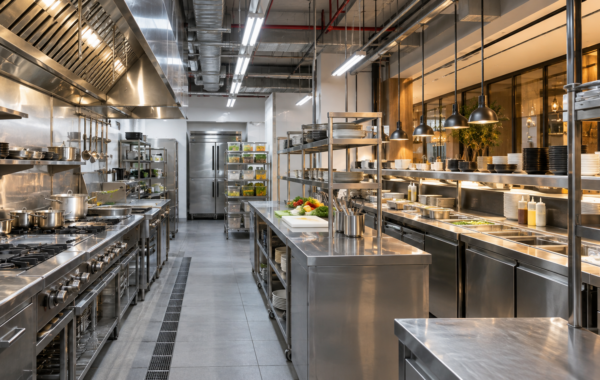
A draft menu helps explain what happens behind the counter. Identify the main preparation methods, the products that need storage and the steps involved in serving a typical order. Flag items you may add later so the team can discuss their implications.
List equipment you already own separately from equipment you intend to buy. Include supplier information, dimensions and service requirements where available. If a model is undecided, say so. A photograph of a similar appliance is not enough to establish its technical needs.
3. Show what you know about the premises
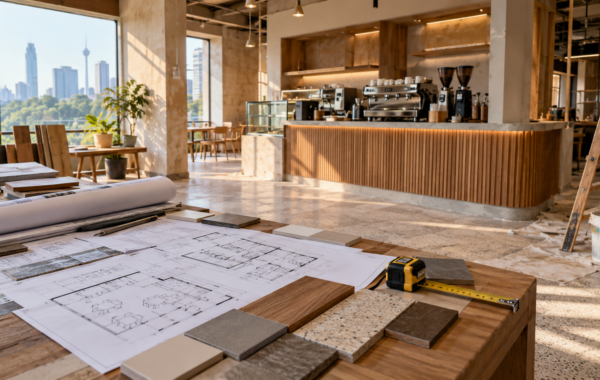
Bring the address, available floor plan, photos and any building-management fit-out rules. State whether the lease is signed, under discussion or still being considered. This helps the team understand which decisions are flexible and which constraints already exist.
Mark the existing elements you hope to reuse, such as counters, equipment or services. Treat reuse as a question to investigate, not a confirmed saving. Condition, suitability and access may need review before the design can rely on them.
For Petaling Jaya premises, MBPJ’s food-premises guidance is a useful reminder to check relevant premises requirements before renting or renovating. Confirm the current process for the actual address and intended activity.
4. Define the budget boundary clearly
Tell the team what your available project budget includes. Is it intended only for the fit-out, or does it also cover kitchen equipment, loose furniture and other opening items? Separate those categories so the discussion starts from the same understanding.
If you are discussing an APIO Launch project with a budget in the RM80,000–RM250,000 range, present that as your planning boundary. It is not a standard package price or a promise that every site and concept can be delivered within that amount. Feasibility depends on the agreed scope, premises and specifications.
Also identify what you would prioritise if choices are required. A concise list of essential functions, flexible preferences and possible later additions is more helpful than calling everything a must-have.
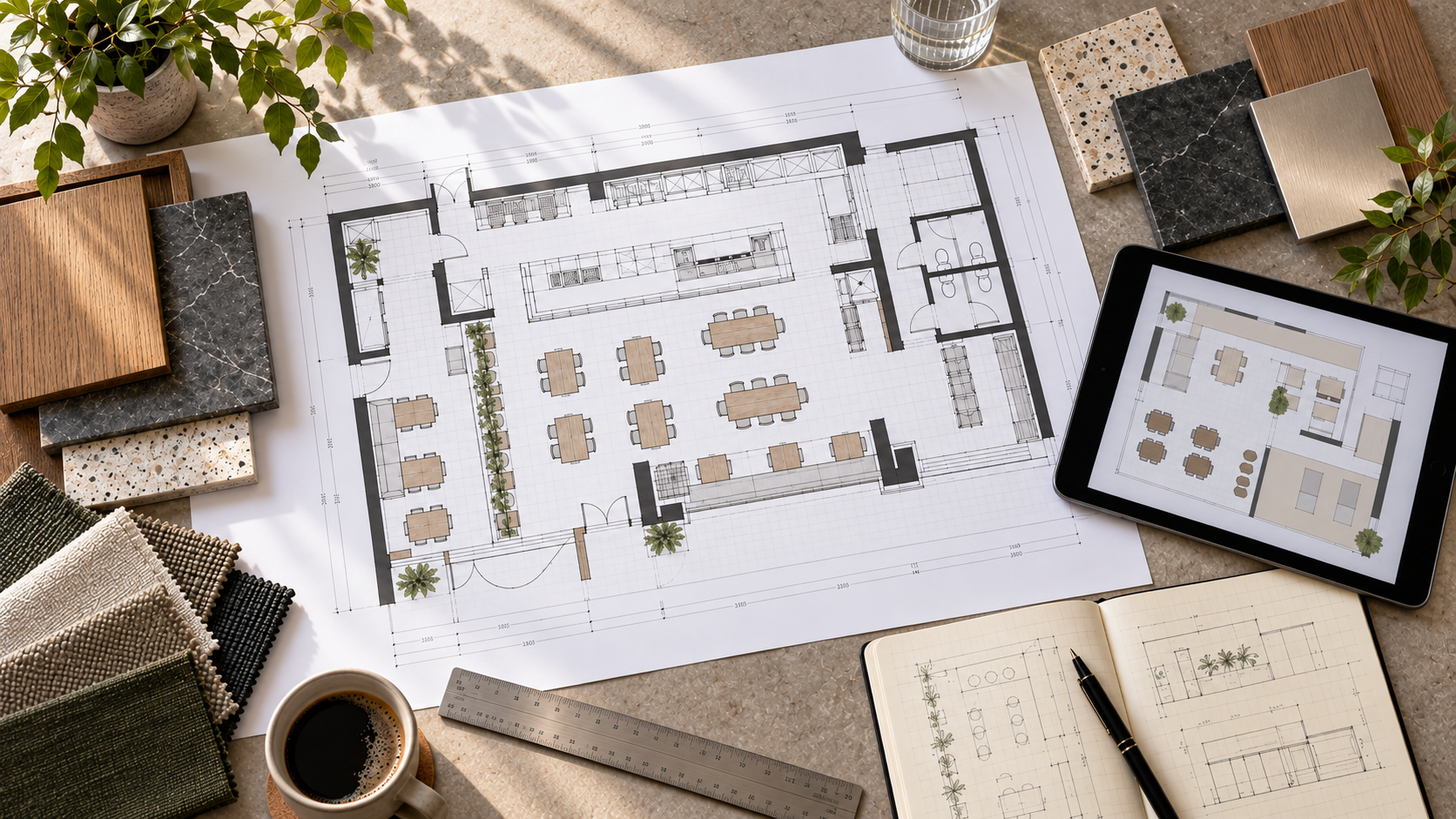
5. Turn visual references into an actionable F&B renovation project brief
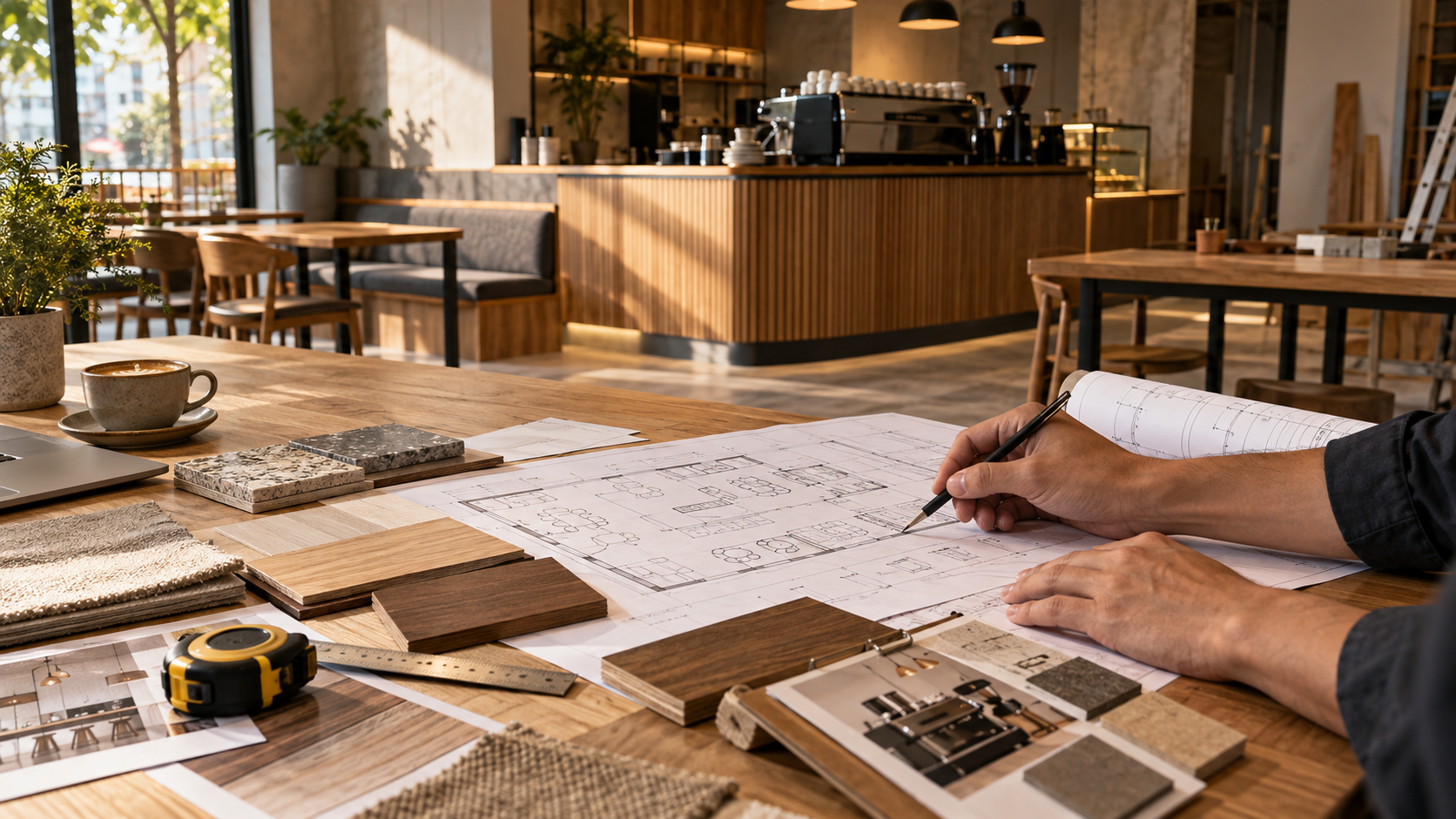
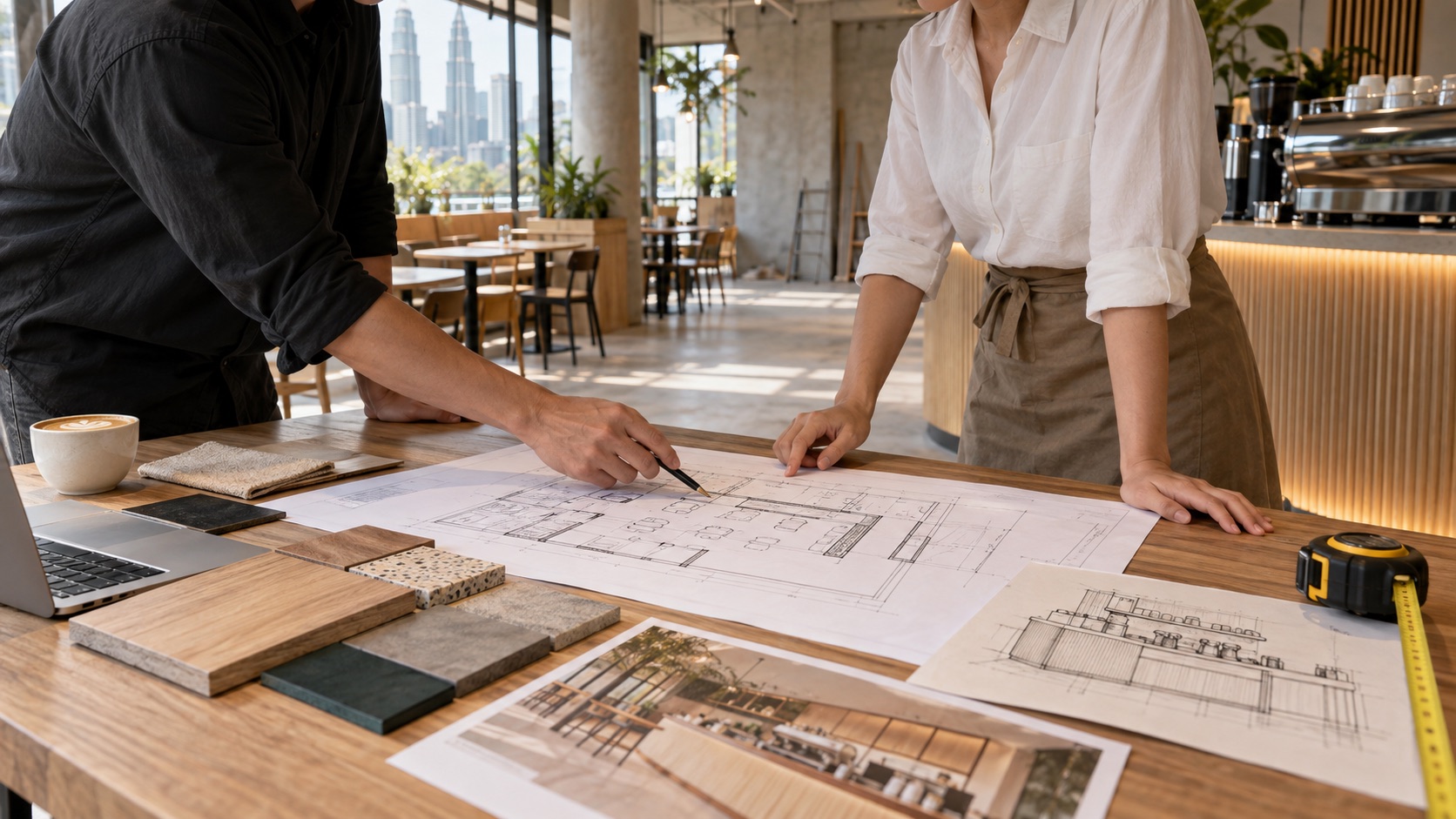
Choose a small set of references and explain what you like about each one. Is it the counter interaction, the material contrast, the seating arrangement or the mood after dark? A reference becomes useful when the team understands the reason behind it.
Avoid asking for an exact copy of another venue. References should support a distinct concept for your business. Pair visual ambitions with operating needs, such as easy replenishment, comfortable waiting or practical cleaning access.
| Brief item | What to provide | If it is undecided |
|---|---|---|
| Concept | Customer occasion, menu direction and service model | List the options you are comparing |
| Premises | Address, plan, photos and building rules | Explain your site-selection stage |
| Equipment | Owned items and proposed purchases | Flag models or cooking methods still open |
| Budget | Available boundary and included cost categories | Identify the range and decisions needed |
| Timing | Opening target and fixed commitments | Separate preference from a firm deadline |
6. Agree what the first consultation should resolve
Choose two or three outcomes: whether the premises needs further investigation, what information is required for a design proposal, or how to define the scope. Ask who makes decisions on your side and who should attend the next discussion.
At the end, record the questions that remain open, the person responsible and the next action. Do not confuse an early conversation with a final cost commitment, technical approval or construction programme.
Frequently asked questions
Can I speak to APIO before choosing a shoplot?
Yes. Explain the locations and formats you are considering. An early discussion can identify the information you should collect before committing to a unit.
Do I need a complete brand identity?
No. Bring what you have and distinguish existing brand decisions from work still needed. Confirm separately which branding services belong in the agreed scope.
What should I read before the meeting?
Our guides to cafe layout planning and choosing a project delivery approach can help you organise the questions.
Start with the business, then shape the space
Bring your working brief to APIO Design. You do not need every answer on day one. A clear account of what is known and what needs resolving gives the first consultation a practical purpose.