
APIO JOURNAL · F&B DESIGN & BUILD · SELANGOR
A cafe pickup counter has to serve people who arrive for different reasons. Some need to order, some are waiting for a drink, and delivery riders may be collecting an order that is already paid for. In a Selangor cafe renovation, treating all three groups as one queue can make the entrance and counter harder to use.
Start by observing the intended service process. If you already operate the cafe, record where people wait and where staff repeatedly redirect them. If this is a new outlet, walk through realistic order scenarios with the team. Design the collection point around those activities rather than adding a shelf wherever space remains.
Separate the decisions customers need to make
An arriving customer should be able to identify where to read the menu, where to order and where to wait. A delivery rider needs a clear way to announce arrival or identify an order without joining the ordering queue unnecessarily. The same counter can support these tasks, but its zones should be understandable.
Keep the instructions short and consistent with the actual process. A collection sign is only useful if completed orders are handed over there. Coordinate signage, staff instructions and the counter arrangement together so they do not send people in different directions.
Draw the three routes on the same plan
Mark the route for a dine-in customer, a takeaway customer and a delivery rider. Add the staff route from preparation to handover. Check the entrance, seating access and counter corners for repeated crossings. Do this with furniture and open doors shown, not on an empty outline of the unit.
| User | Needs a place for | Check for conflicts with |
|---|---|---|
| Ordering customer | Menu reading, ordering and payment | Riders collecting completed orders |
| Takeaway customer | Waiting and collecting | Entrance movement and seated guests |
| Delivery rider | Arrival confirmation and handover | The till and drink preparation |
| Staff | Order checking, packing and release | Restocking and used-item returns |
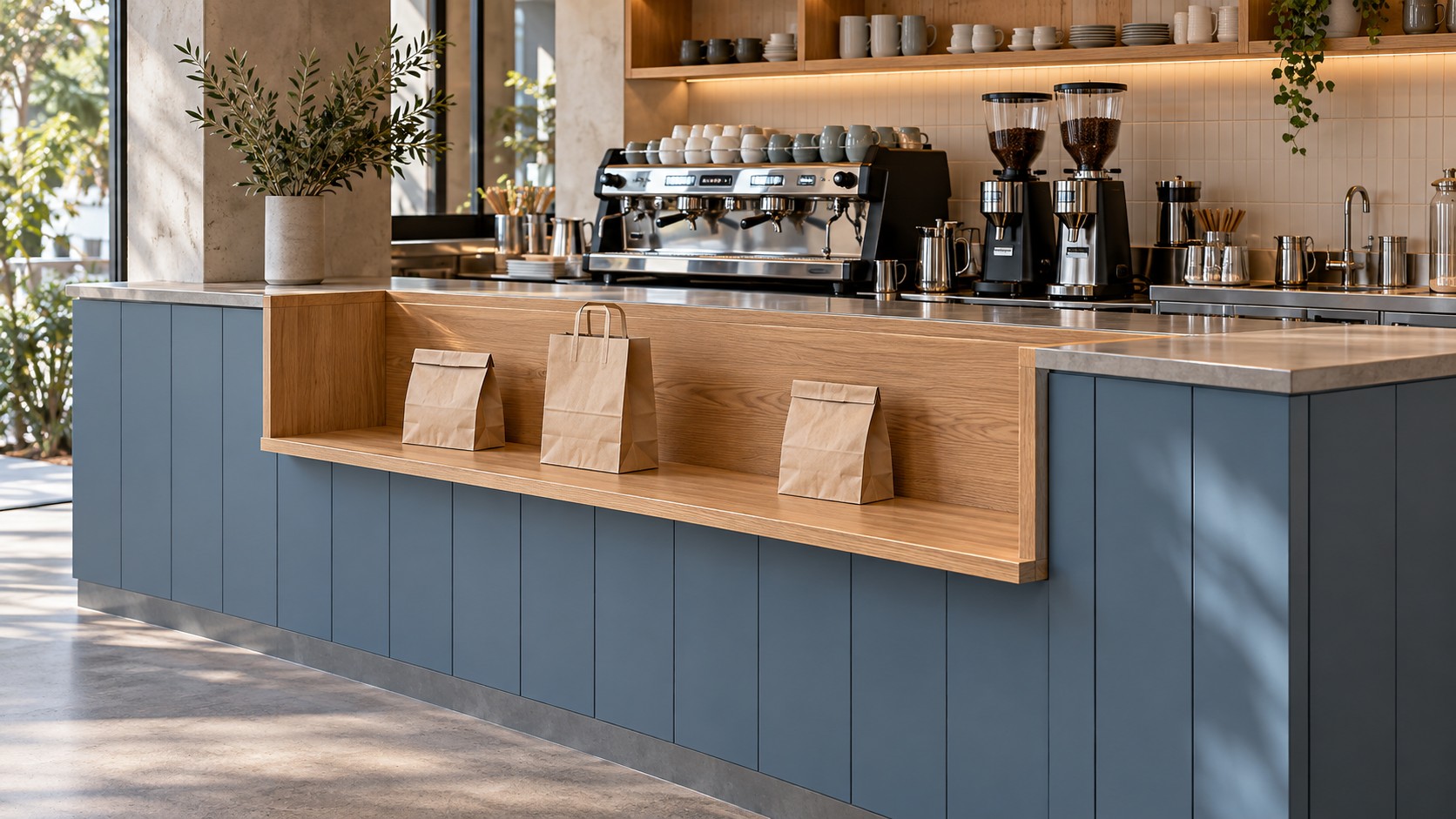
Size the waiting area around the operating scenario
There is no useful universal answer to how many people should fit beside every cafe counter. Describe the expected order mix and busy-period pattern, then test a scenario appropriate to the business. A takeaway-led cafe may need to prioritise waiting and collection space differently from a quieter dine-in operation.
Use temporary markers or a simple mock-up before finalising the layout. Ask people to stand where they would read the menu, wait and collect. Notice whether they block a seated guest or force arriving customers to squeeze through. Treat the exercise as a way to find problems, not a guarantee of capacity.
Give staff a complete handover station
The visible collection shelf is only part of the station. Staff also need space to check the order, pack it, add the required items and confirm it is going to the right person. Locate the supplies used for those tasks so they do not require repeated trips across the preparation area.
Decide how completed orders are identified and released. Avoid a layout that relies on customers reaching across active preparation equipment. Review the handover process with the operating team and keep the design consistent with its chosen procedure.
Protect the counter from becoming general storage
List the supplies that tend to accumulate during service: bags, cups, lids, receipts and delivery packaging. Provide a defined place for them. Otherwise, the collection surface can gradually become storage and push orders back towards the till.
Include cleaning access in the counter detail. Ask the team how surfaces, shelves and equipment interfaces will be reached. Review proposed materials against their intended use and supplier care guidance. A visually tidy counter should also be practical to reset between busy periods.
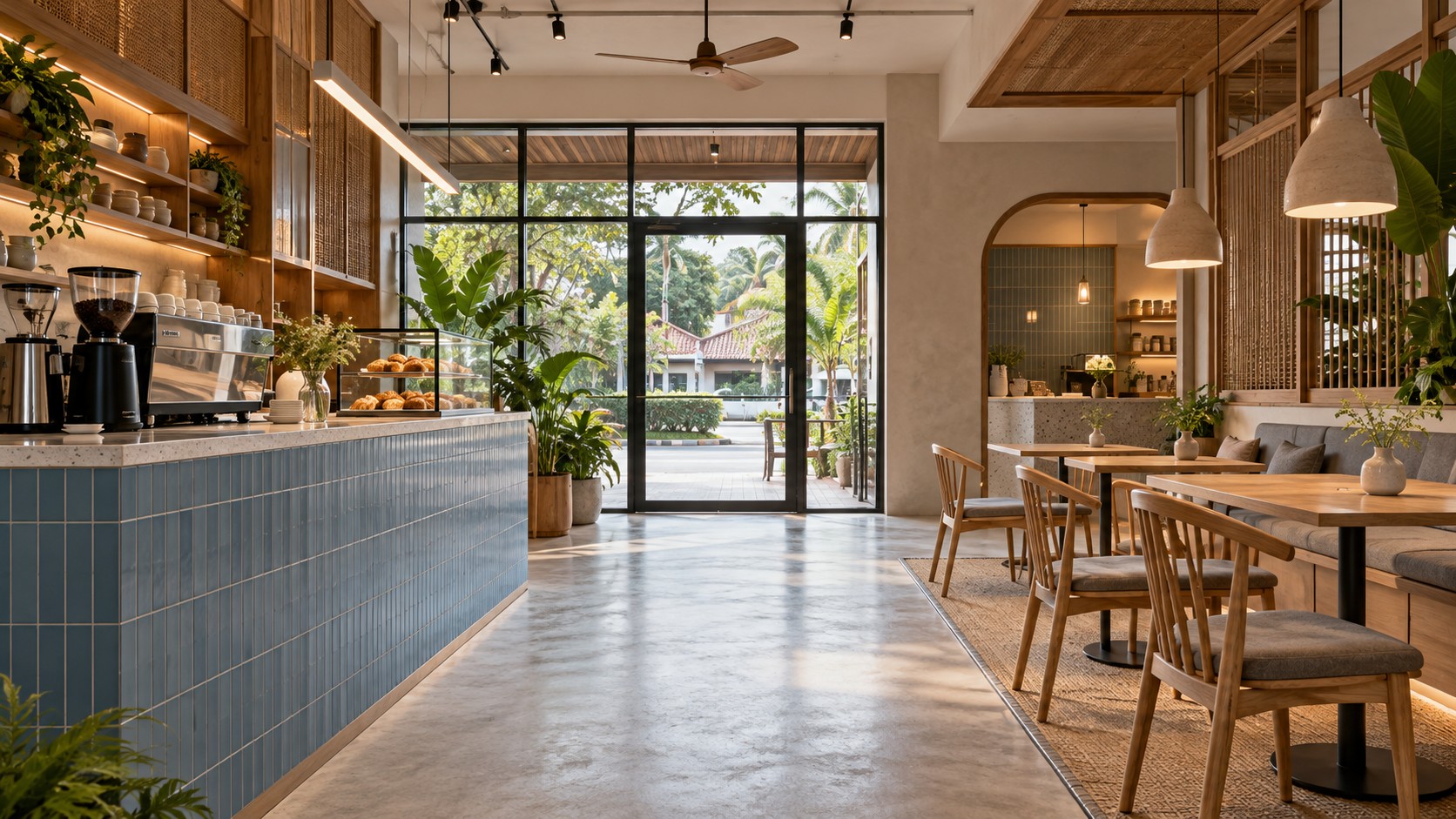
Coordinate collection with the rest of the cafe
A good pickup arrangement should work with the kitchen and drinks station. Moving collection away from the till can create another problem if staff must carry every order through the seating area. Compare the customer route and staff route together before choosing the final location.
For a broader planning discussion, read APIO’s guide to brand, layout and operations.
Use a simple pre-construction check
- Identify where each visitor type arrives and waits.
- Check that the order point and collection point are understandable.
- Walk the staff route from preparation to handover.
- Provide storage for packing supplies without occupying collection space.
- Review furniture, doors and cleaning access together.
- Record the accepted arrangement and the reasons behind it.
Frequently asked questions
Does a small cafe need a separate pickup counter?
Not necessarily. A clearly defined collection zone on the same counter may work. Test whether it separates the tasks without creating a longer or more awkward staff route.
Should delivery riders wait inside or outside?
That depends on the premises and operating arrangement. Review available space and applicable site conditions, and provide clear instructions without obstructing access or circulation.
Can signage fix a crowded collection area?
Signage can clarify the process, but it cannot create missing space or resolve every route conflict. Review the layout, waiting behaviour and staff handover procedure together.
Plan your next outlet with APIO
Share your Selangor location, outlet concept, proposed scope and available drawings through the APIO project planner. Include the operational questions you want the design to resolve, so the first conversation can focus on how your business needs the space to work.
Tell us about your F&B project
Use APIO’s existing enquiry form below to share your project details.