
APIO JOURNAL · F&B DESIGN & BUILD · SELANGOR
Your first restaurant fit-out should start with what you plan to serve. A menu becomes a useful equipment brief when it explains preparation, storage, cooking, service and cleaning. For a first-time owner in Selangor, this is a practical way to connect the business idea to the renovation scope before cabinetry and service points are fixed.
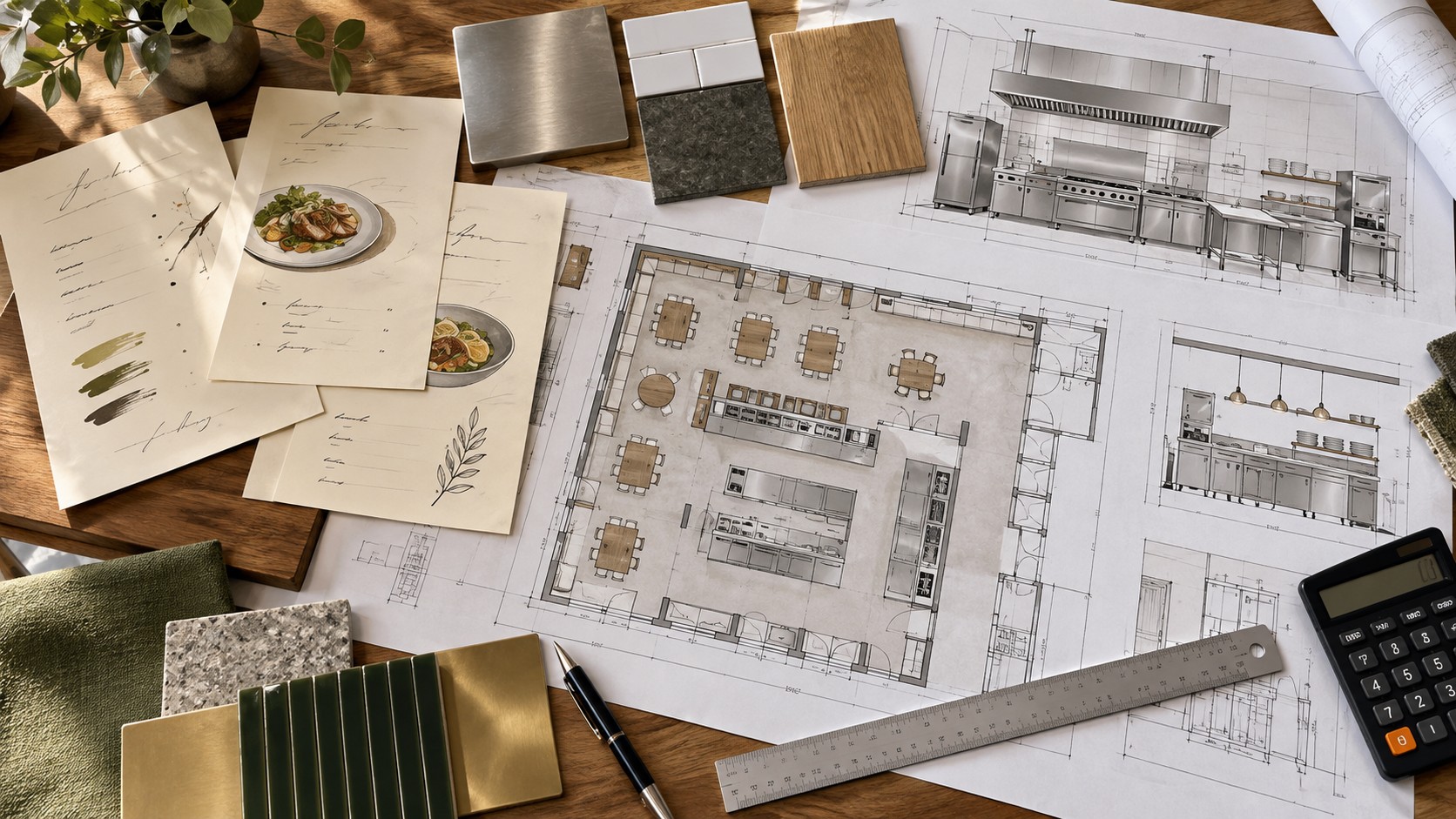
The brief does not need to begin as a technical drawing. Start with a simple worksheet and review it with the people who will prepare the food. Equipment suppliers and the relevant specialists can then confirm the technical requirements. This helps prevent a design from being based on an incomplete shopping list.
Map each menu item to its preparation sequence
Choose representative dishes from the proposed menu. Write the steps from receiving ingredients to serving the finished order. Include storage, preparation, cooking, plating and the return of used items. Group tasks that use the same station instead of assigning a separate piece of equipment to every dish.
For example, several dishes may share refrigeration and a preparation surface but need different cooking equipment. Record which tasks happen together during a busy service. The purpose is to uncover dependencies; it is not to claim that a particular layout guarantees a production rate.
Create a schedule that another team can coordinate
Give each proposed item a reference number. Record the information available and leave missing requirements visibly marked for confirmation. Ask the supplier for current product and installation information before the design team coordinates the final location.
| Brief field | What to record | Why it matters |
|---|---|---|
| Menu task | What the equipment supports | Connects the purchase to the operation |
| Selected item | Model and supplier reference | Avoids designing around a generic size |
| Physical information | Dimensions, access and service space | Coordinates counters and circulation |
| Connections | Supplier requirements for specialist review | Defines interfaces with the fit-out |
| Responsibility | Who supplies, installs and connects it | Prevents omissions and double pricing |
| Timing | Required delivery and confirmation dates | Links procurement to construction |
Include the equipment that is easy to overlook
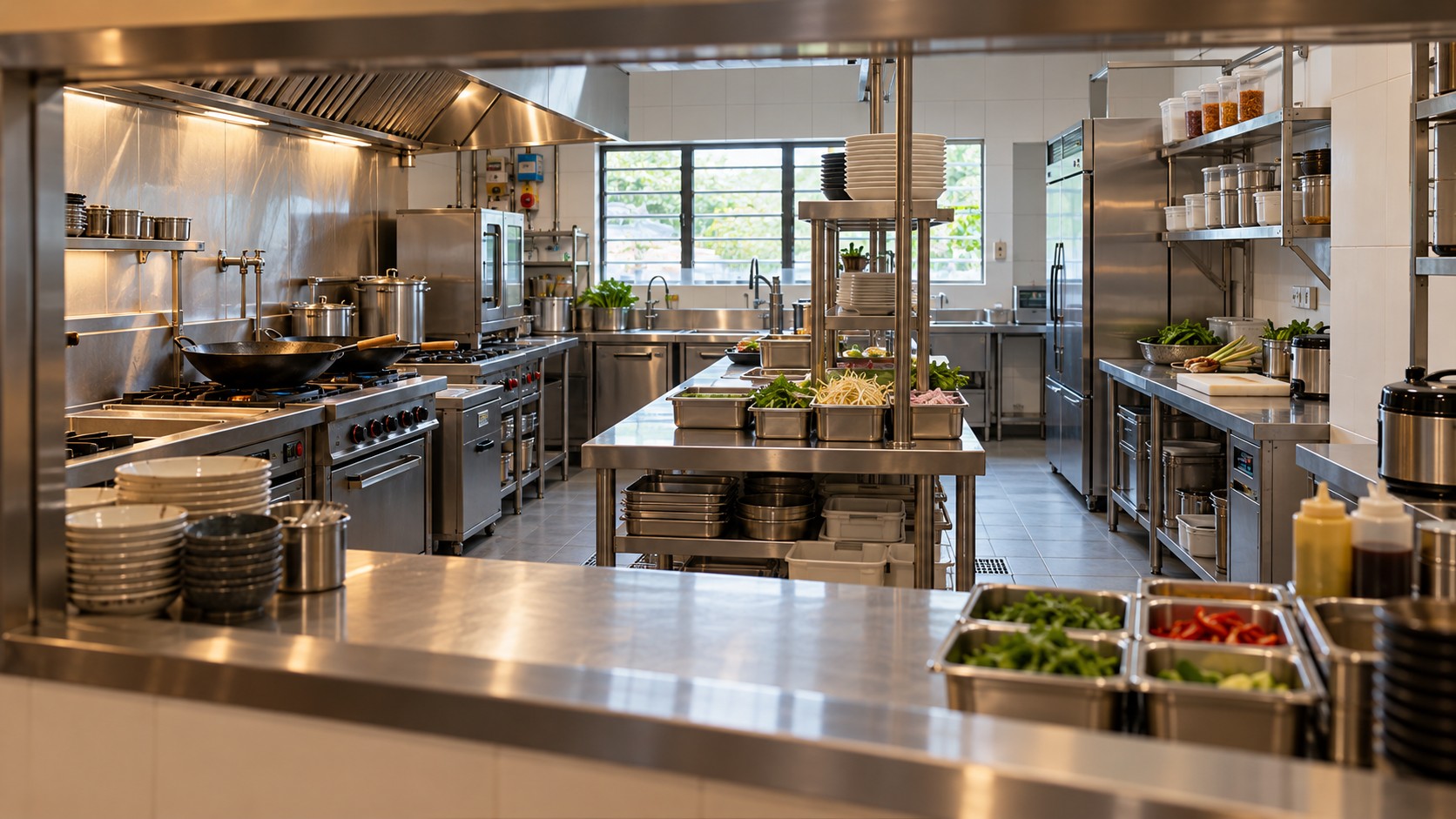
Owners often focus on cooking equipment first. Add the supporting pieces: dry storage, refrigerated storage, preparation surfaces, dish handling, cleaning storage and waste holding. Consider how supplies enter the premises and where they wait before use.
Also list smaller appliances and items supplied by the owner. They can affect worktop space, storage and connections even when they are outside the main contractor’s supply package. A separate owner-supplied list should still be coordinated with the same drawings.
Check the premises before confirming purchases
Ask the design team to compare the proposed equipment with measured site information. Record existing service locations and any constraints that need specialist assessment. A machine fitting through the entrance does not establish that the premises can support its operation.
Keep uncertain items in an open-issues register. State the question, the responsible party and the decision deadline. Avoid treating an existing connection as suitable merely because a previous restaurant used it. The proposed equipment and operating model may be different.
Resolve the interfaces between suppliers and contractors
For each item, decide who receives it, moves it into position, installs it, makes the required connections and demonstrates its operation. Ask who is responsible for the surrounding counter, access panels and finishing. Record these responsibilities in the scope used for quotations.
Confirm what must be known before joinery or service work is released. If the chosen item changes, ask the team to review the effect on dimensions, connections and programme before accepting the substitution. Updating the equipment list without updating the drawings can leave the site team working from different instructions.
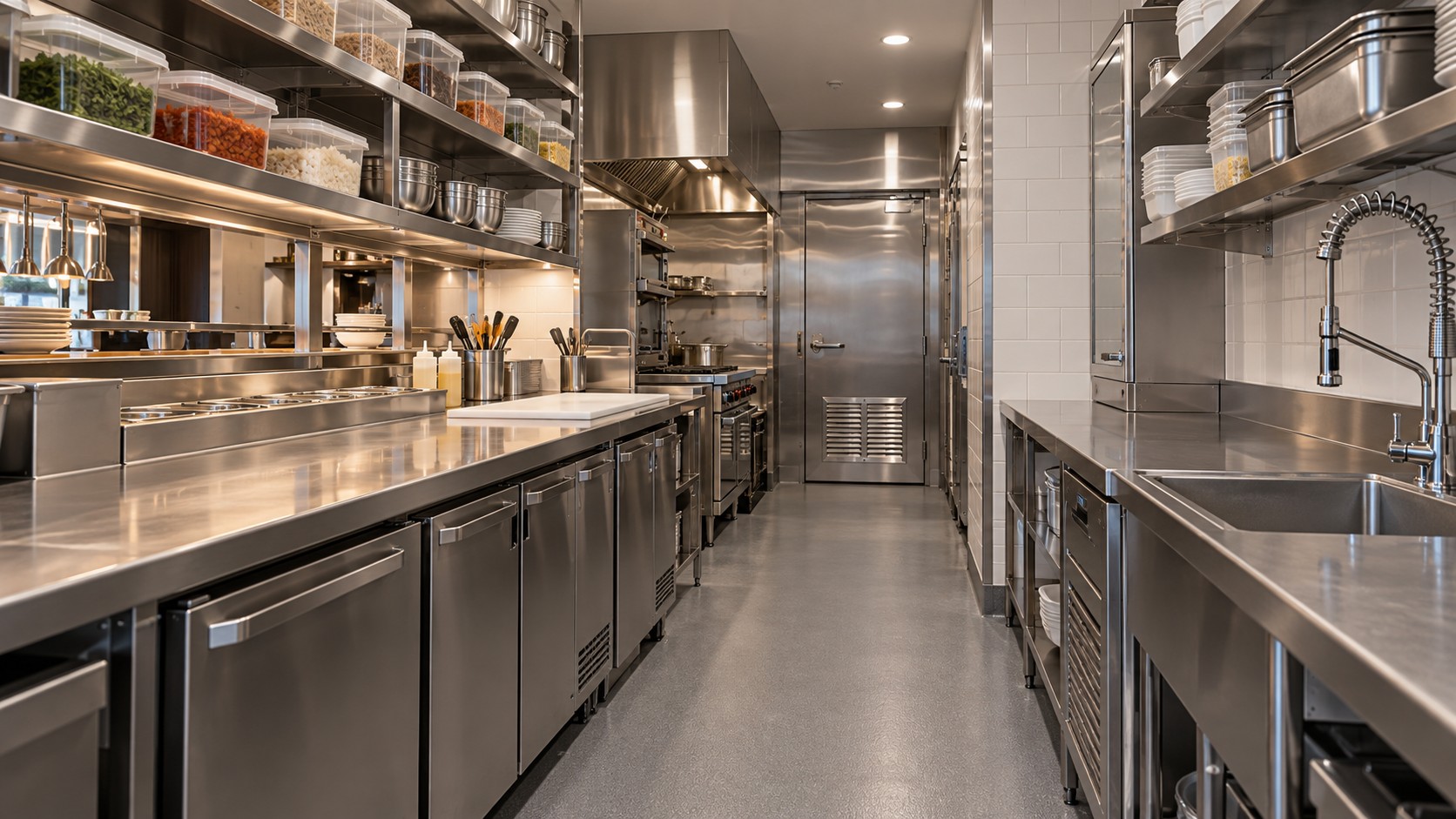
Test the brief with a service walkthrough
Trace an order through the proposed stations. Then trace a delivery, a used plate and a cleaning task. Identify places where staff would repeatedly cross or where open doors could interrupt movement. Discuss these conflicts before the plan becomes a construction instruction.
APIO’s restaurant kitchen flow guide provides a related planning framework. Use it alongside the equipment schedule: the list explains what the outlet needs, while the layout explains how those items work together.
Bring these five items to the first design discussion
- A proposed menu with the main preparation methods.
- A list of selected equipment and items still being compared.
- Supplier dimensions and installation information where available.
- Site photographs, available drawings and known constraints.
- A responsibility list separating owner and contractor supply.
Frequently asked questions
Do I need to choose every equipment model before meeting a designer?
No, but separate confirmed choices from provisional items. Share available dimensions and supplier information, and agree which decisions must be resolved before construction details are issued.
Can the contractor choose the equipment for me?
That depends on the agreed scope. Make responsibility explicit, and involve the operating team and equipment supplier so the selection matches the intended menu and site.
Is an equipment brief a final kitchen design?
No. It is an input to coordinated design. Layout, services and installation requirements still need to be checked against the premises by the appropriate team.
Plan your next outlet with APIO
Share your Selangor location, outlet concept, proposed scope and available drawings through the APIO project planner. Include the operational questions you want the design to resolve, so the first conversation can focus on how your business needs the space to work.
Tell us about your F&B project
Use APIO’s existing enquiry form below to share your project details.