

Loose chairs are part of a cafe’s working routine. Guests pull them out, staff move them to clear tables, and the closing team handles them during cleaning. Cafe interior design should therefore review more than the silhouette and colour. A useful chair selection connects guest comfort with handling, care, storage and a realistic replacement process.
For a cafe in Selangor, test representative samples before committing to the full order where possible. Use the intended floor surface and a realistic operating routine. The purpose is to understand the product in your setting. A brief sample trial does not establish long-term durability or replace the supplier’s technical information.
Write down how the chairs will be used
List the expected activities: short coffee visits, full meals, longer conversations, rearranging tables and end-of-day cleaning. Note whether staff will move chairs frequently and where any spare chairs will be stored. Do not select a stacking chair solely because it stacks if the outlet has no suitable space for the stack.
Discuss the intended setting with the supplier. Confirm that the exact model and finish are suitable for the proposed use and environment, including any outdoor area. Indoor and outdoor versions can differ. Ask for written product information rather than assuming that a familiar appearance means two models have the same specification.
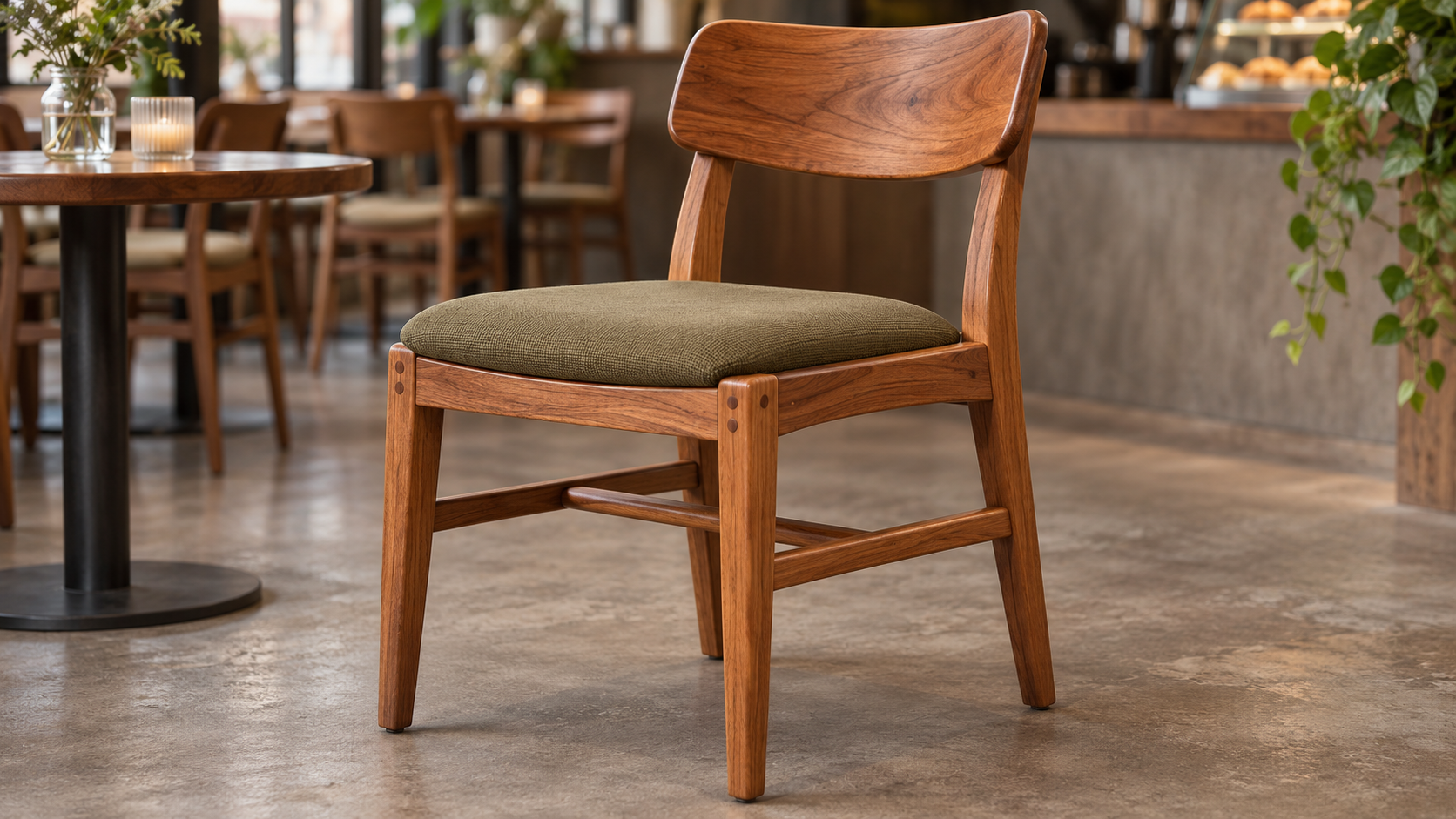
Review a sample through an ordinary service sequence
Ask several team members to sit, stand and move the chair as they would during service. Check whether it is comfortable to handle, whether a backrest provides a useful grip and whether the chair catches on adjacent furniture. Test the actual sample; a catalogue image cannot show how a particular chair feels when lifted.
Observe the chair on the proposed floor. Check for rocking, visible marks and the behaviour of its supplied feet or glides. Ask the supplier about compatible replacements and care instructions. Do not improvise a modification that changes stability or invalidates the supplier’s guidance just to resolve a problem noticed during the trial.
| Daily task | What to observe | Question for the supplier |
|---|---|---|
| Guest use | Ease of sitting, standing and moving the chair | Is this model suitable for the intended setting? |
| Table clearing | How staff handle and reposition it | What handling guidance applies? |
| Floor cleaning | Contact points and access around the legs | Which glides and cleaning methods are compatible? |
| Storage | Space needed and stability of the permitted arrangement | Can this exact model stack, and under what instructions? |
| Repairs | Access to serviceable parts and visible wear points | Which replacement parts are available? |
Treat stacking as a product-specific feature
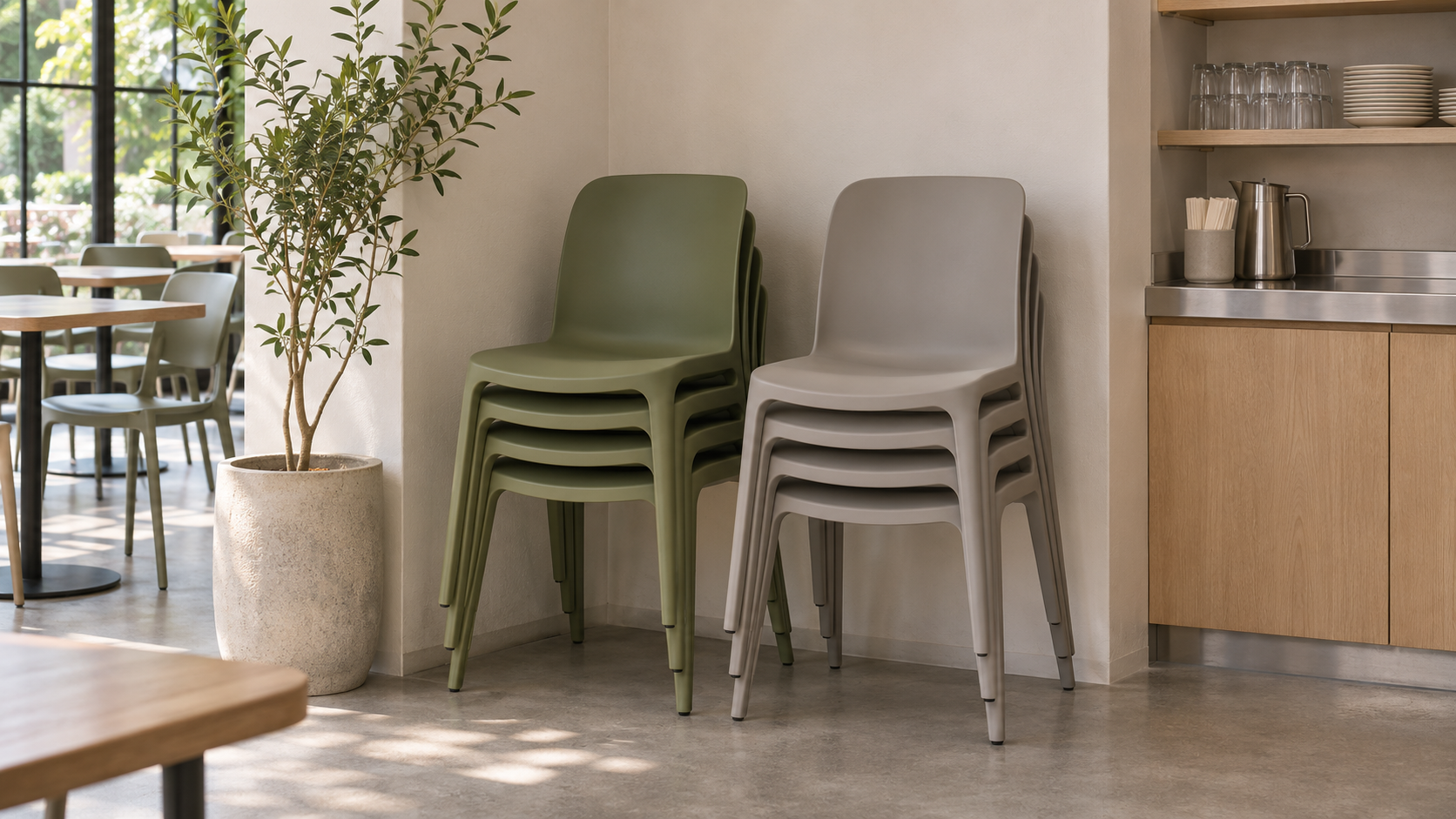
Only plan stacking when the supplier confirms that the exact chair is designed for it. Ask for the permitted method, accessories and limits. Different versions of a chair may have different arms, upholstery or frames, so a specification for one version should not automatically be applied to another.
If stacking is part of the operating plan, demonstrate it with the approved sample and identify the storage location. Check the route staff will use and whether the stored arrangement interferes with other activities. Avoid building a seating plan that depends on moving chairs into an unspecified corridor at closing time.
Match the care method to the model and finish
Request care instructions for every material in the selected chair, including upholstery, timber, metal and plastic where relevant. A single cleaning product may not be appropriate for all surfaces. Ask how the instructions fit the cafe’s actual cleaning routine, and resolve mismatches before the order rather than leaving staff to experiment.
The Herman Miller care and assembly resource illustrates how manufacturers publish guidance for specific products and finishes. Use the equivalent guidance from your selected supplier. This example is not a product recommendation or a cleaning specification for other brands.
Inspect the sample for seams, recesses and joints that the team will need to reach. Consider how a spill or crumbs would be addressed using the permitted care method. Our cafe materials guide explains why cleaning questions should accompany visual selections.
Plan repairs and replacements before ordering
Ask which parts can be replaced, how they are identified and who carries out the work. Glides, upholstery components or other fittings may be serviceable on some products but not on others. Record the exact model, finish and supplier reference so a future request is based on the delivered chair rather than a similar photograph.
Clarify availability and the process for a later top-up order. A current collection may change, so avoid treating future matching supply as guaranteed. If the business chooses to hold spare chairs or parts, give them a suitable storage location and a clear inventory reference. Keep damaged chairs out of guest use while their condition is assessed.
Choose a coherent mix that the team can manage
A cafe can use different chair types to support its design, but every additional model creates another set of handling and care requirements. Keep the mix deliberate. Label the approved sample and record where each type belongs so the delivered order can be checked against the agreed selection.
- Confirm the exact model, finish and intended use.
- Record sample-test observations and unresolved questions.
- Keep handling, stacking and care instructions with the purchase record.
- Identify replacement glides or other available service parts.
- Agree the process for reporting damaged or unstable chairs.
Finally, place the selected chairs into the proposed service-flow layout. Review the movement of guests and staff with chairs in use, not just pushed neatly under tables. The selection is ready when the product information and everyday trial support the way your cafe will actually operate.
Frequently asked questions
Can any cafe chair be stacked?
No. Confirm the exact model’s stacking instructions with its manufacturer or supplier. Appearance alone is not evidence that stacking is permitted.
Does a heavier chair mean better quality?
Weight alone does not establish suitability or durability. Review the intended use, product information, sample behaviour and supplier support together.
Should all the chairs be identical?
Not necessarily. A deliberate mix can support the design, provided the operating team can manage its different handling, storage and care needs.
Discuss your cafe project with APIO
Use the APIO project planner to share your premises, menu, project stage and priorities. Tell us which decisions remain open so we can discuss the design support your cafe needs.